
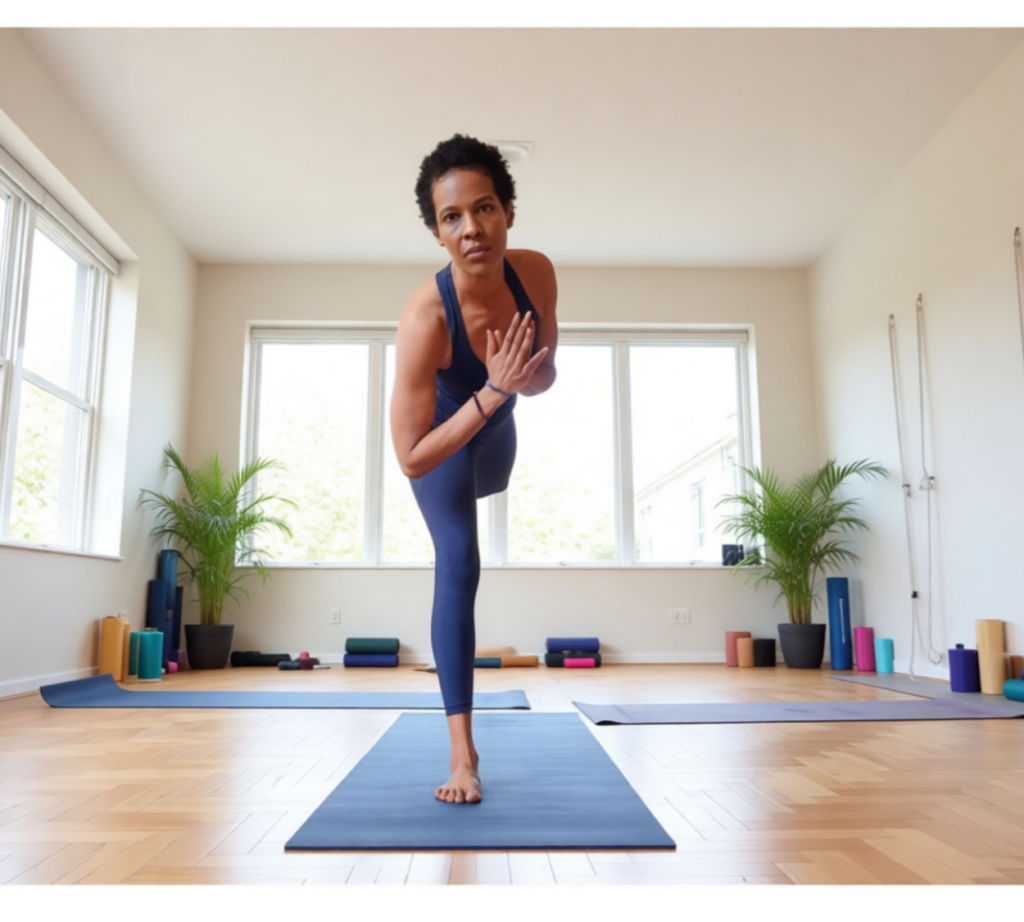
If there’s one thing I’m living by in 2026, it’s mindful strength—movement that supports the life I’m already living. For me, exercise isn’t a separate category; it’s part of how I care for myself. It’s how I stay steady, stand tall, move with ease, and show up feeling grounded in my body—on the mat and in everyday moments.
For me, the anchor has been my daily yoga practice—especially balance work. It’s become my quiet, consistent way of caring for my bones, my joints, my nervous system, and my overall health—all in one practice.
After more than 25 years of practicing yoga, I decided to learn how to teach. I completed a 300-hour Vinyasa teacher training in the Iyengar lineage to deepen my understanding of the fundamentals: alignment, stability, and the kind of strength that supports you for life. That foundation is exactly why I place so much emphasis on balance, bone-supportive movement, and steady, sustainable routines.
And the best part? You don’t need a gym or a complicated plan. You need a few smart ingredients: mobility, fascia-friendly movement, strength, and balance.
Why balance matters for longevity (and bone health)
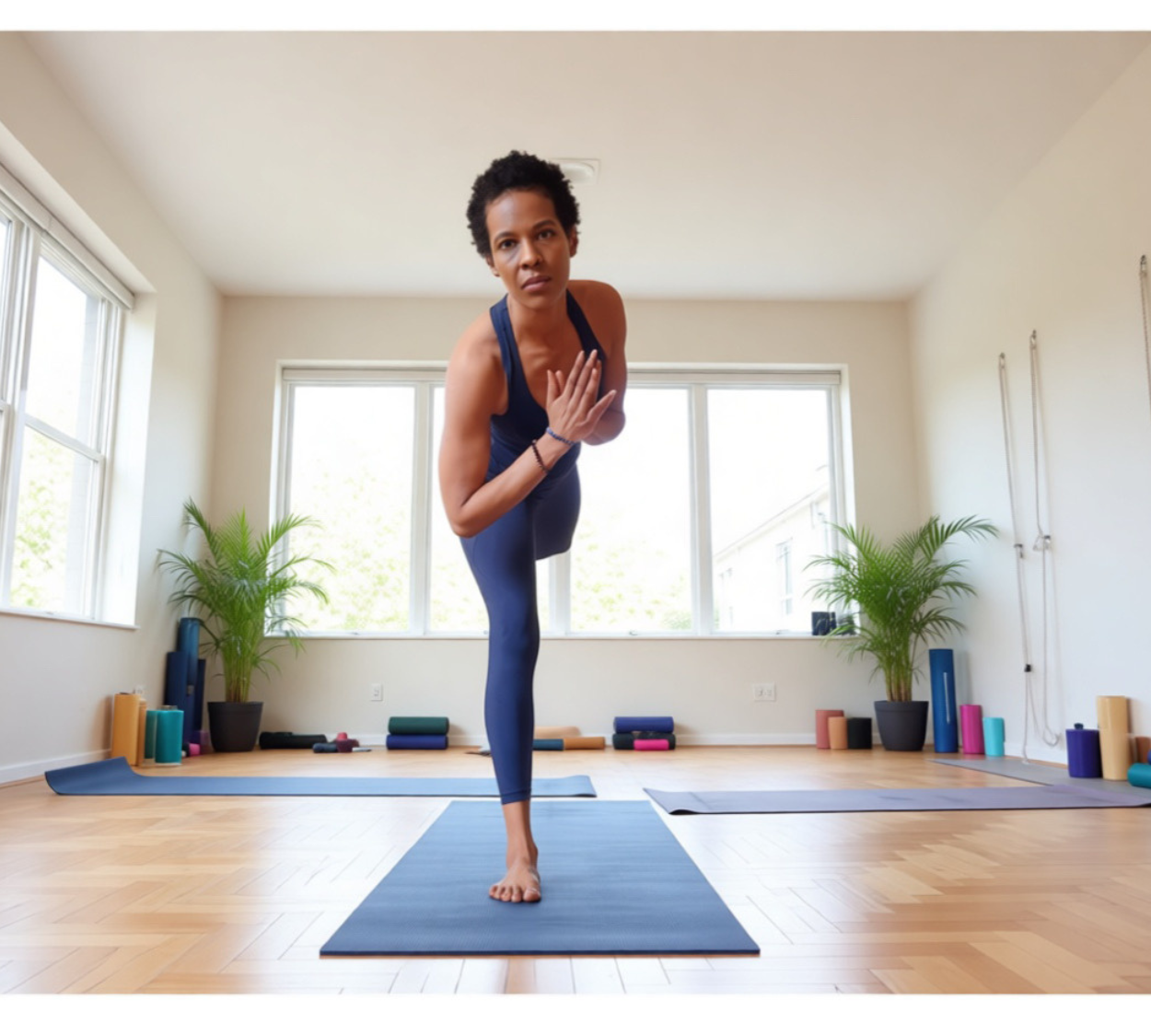
Balance training isn’t just about looking graceful in a pose—it’s deeply practical. It supports coordination, joint stability, and confidence in everyday movement. And for long-term health, reducing fall risk is a big deal because many fractures result from falls, not just “weak bones.”
Many bone-health resources include balance exercises as part of a comprehensive approach for people at risk for low bone density and osteoporosis. “Exercise strengthens muscles and bones,” and “improves balance… helps prevent falls.”
The role my daily yoga practice plays
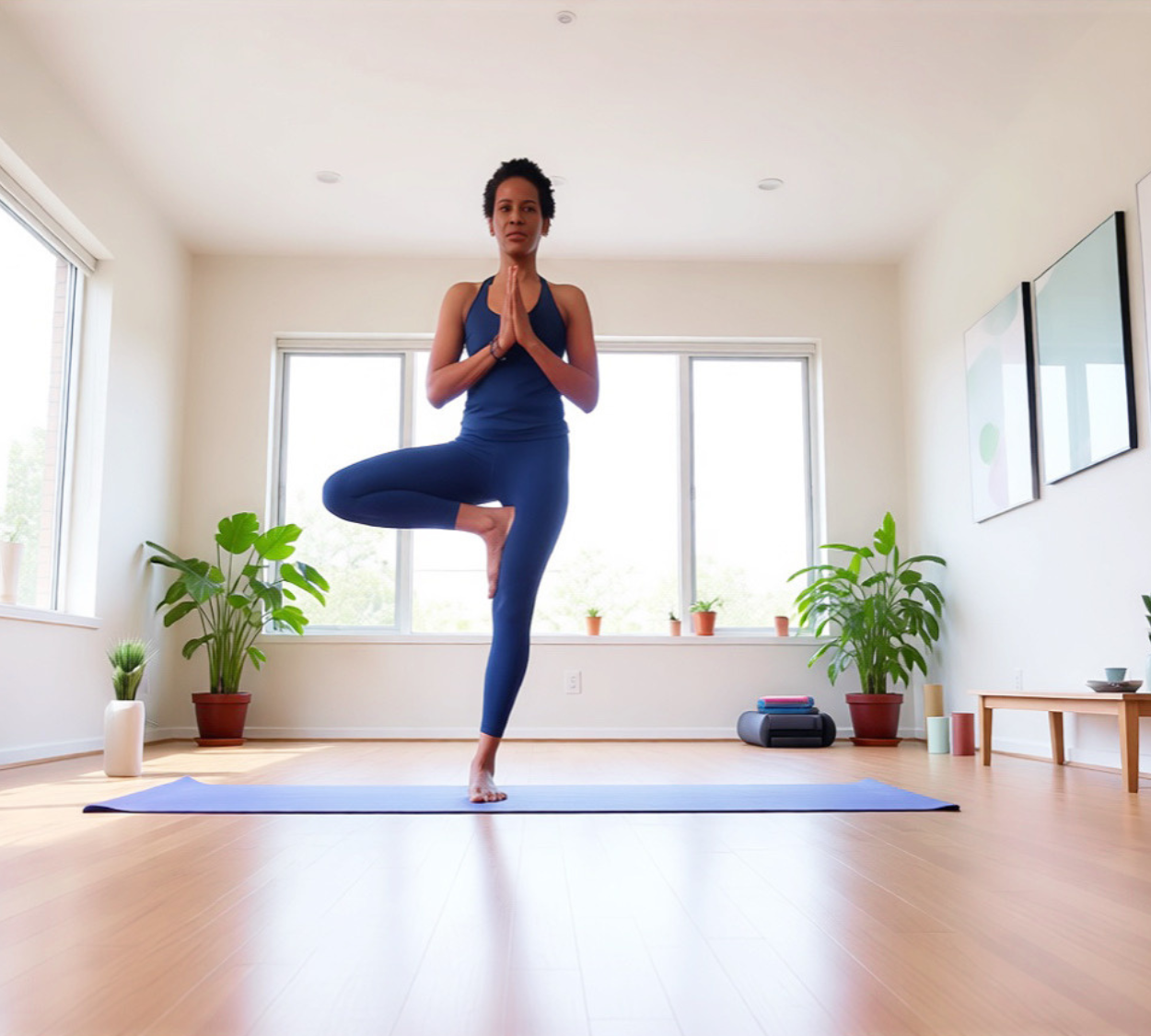
My daily yoga is where I return to alignment, steadiness, and body awareness.
Even a short practice improves how I move through the day:
- I feel more centered (less rushing, less clenching)
- My posture feels more supported
- My balance becomes more reliable
- And over time, I’ve noticed it helps me stay consistent with the other essentials—like walking and strength work
Through my 300-hour Vinyasa training in the Iyengar lineage, I learned to love the fundamentals—how alignment creates stability, and how stability supports confidence. That’s why I teach balance as something gentle and trainable, not intimidating. A few minutes a day adds up.
Yoga alone isn’t the only tool for bone health, but it can be a meaningful part of the puzzle—especially when it includes standing postures, weight-bearing poses, and balance holds. A systematic review and meta-analysis have examined yoga and Pilates interventions and their relationship to bone density outcomes in adult women.
Bone health basics in plain language
Bones respond to stress in a good way—the right kind of load signals the body to maintain or improve bone strength. That’s why strength training and weight-bearing movement matter.
Mayo Clinic notes that strength training can increase bone density and reduce the risk of osteoporosis, and it can also improve balance and reduce fall risk.
And the big-picture guidelines? ACSM highlights that adults should include muscle-strengthening activities at least 2 days per week (in addition to aerobic activity).
Your simple longevity routine (20 minutes, no gym, real results)
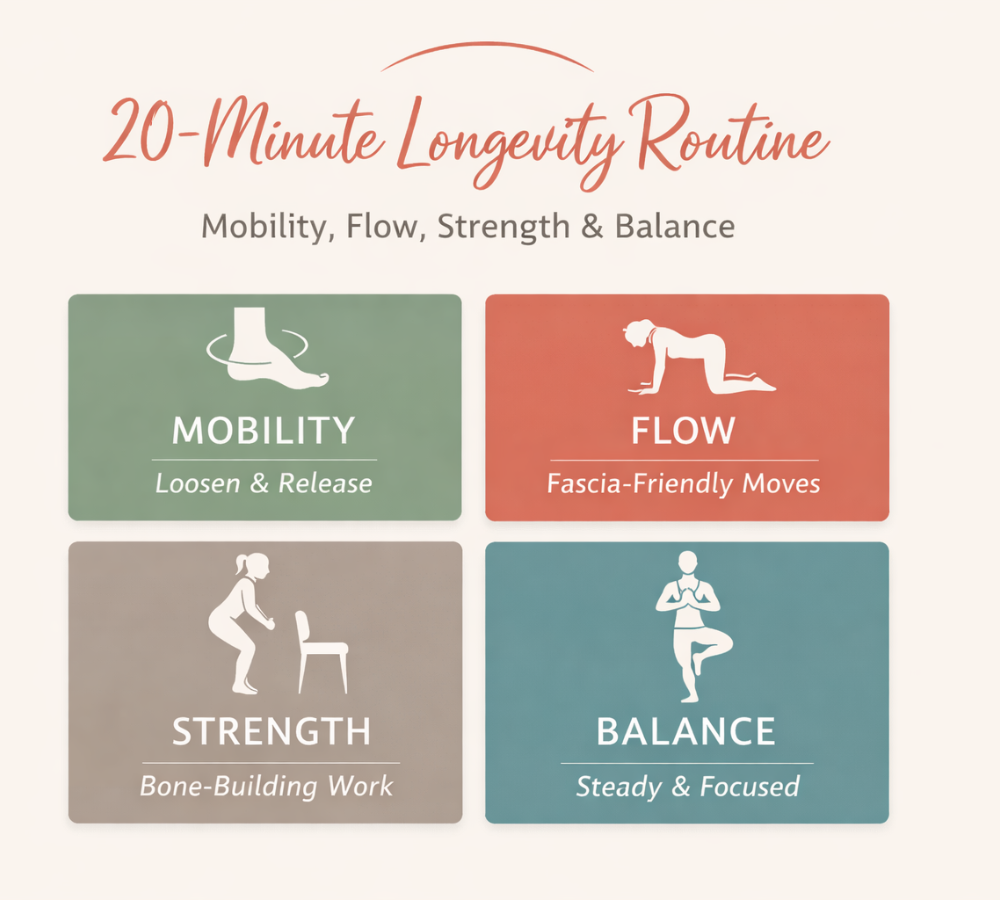
This is the at-home structure I love because it’s doable—and it covers what matters.
Part 1: Mobility (5 minutes)
Think: “open the sticky places.”
- Ankle circles (1 minute total)
- Hip circles / figure-4 stretch (2 minutes)
- Thoracic twists (2 minutes)
Mobility supports joint range and helps your balance work feel safer and smoother.
Part 2: Fascia-friendly flow (5 minutes)
Fascia responds beautifully to gentle rhythm and varied movement.
- Cat–cow (1 minute)
- Down dog to plank waves (2 minutes)
- Standing forward fold + slow roll up (2 minutes)
Keep it soft and intentional—this is where your body starts to feel “online.”
Part 3: Strength for bones (6 minutes)
(Bodyweight is enough to start.)
- Sit-to-stand (or squats to a chair) – 2 sets of 8–10
- Wall push-ups (or incline push-ups) – 2 sets of 8–10
- Calf raises – 2 sets of 10–12
This is bone-supportive, functional strength—simple and effective.
Part 4: Balance (4 minutes)
Balance is a trainable skill—and short, consistent practice matters.
- Single-leg stand (light support if needed) – 30 seconds each side, repeat twice
- Heel-to-toe walk (slow and steady) – 1 minute
The Physical Activity Guidelines advisory report (summarized by ACSM) notes strong evidence that physical activity reduces fall-related injuries in older adults by a meaningful margin.
A yoga-focused “balance snack” (2–3 minutes daily)
This is what I do on busy days when I still want to feel connected to my body:
- Mountain Pose (30 seconds) — feet grounded, posture tall
- Tree Pose (30–45 seconds per side) — soft gaze, gentle breath
- Warrior III prep (hands on wall) (30 seconds per side) — hips square, slow control
Small practice. Big payoff.
Weekly rhythm (simple and sustainable)
Here’s a realistic cadence that supports bone health and overall longevity:
- 2 days/week: strength-focused (bones + muscles)
- Most days: walking or weight-bearing movement
- Daily (even 3–5 minutes): yoga + balance practice
- 1 day/week: longer mobility session
Safety note (especially if you have osteoporosis or pain)
If you have osteoporosis, osteopenia, or a history of fractures, it’s smart to follow safe exercise guidance and avoid movements that aggravate symptoms. Mayo Clinic has specific recommendations for exercising safely with osteoporosis.
(And as always, check with your clinician or physical therapist if you’re unsure what’s appropriate for your body.)
Make it a ritual (because consistency is the real “anti-aging”)
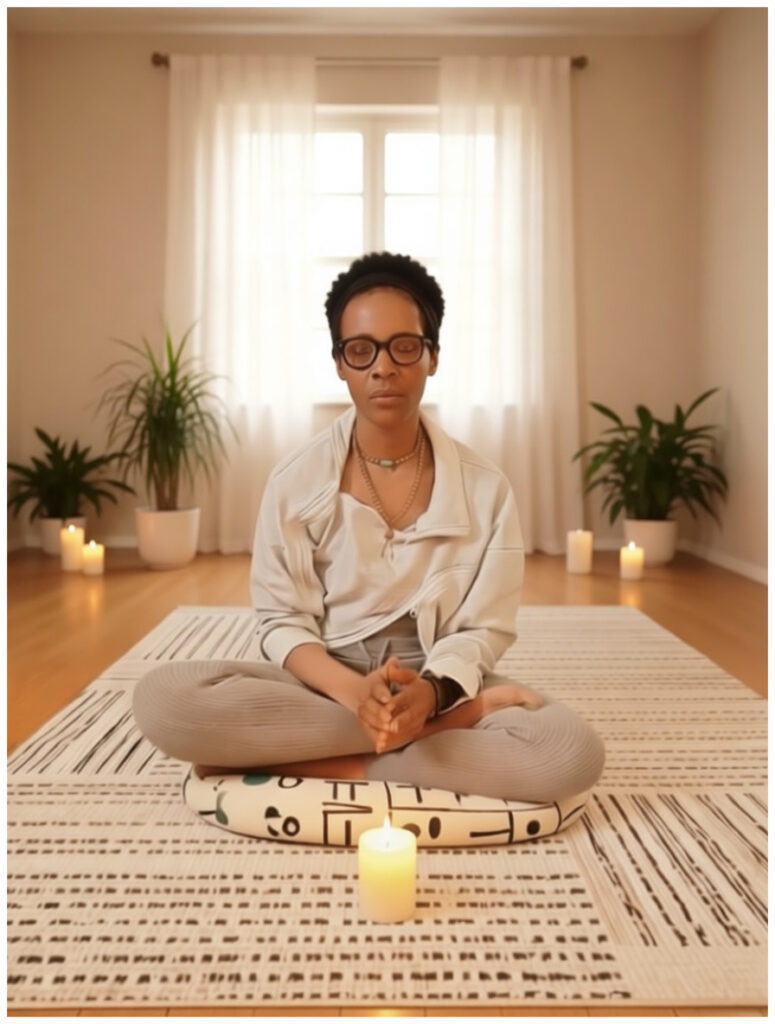
I’ll say it gently: your body loves repetition when the repetition is kind.
My daily yoga gives me that steadying effect—balancing my nervous system, supporting my posture, and keeping me connected to my strength. And when I pair that with a little strength and weight-bearing movement, I feel like I’m actively investing in my bones and my future.
Key Takeaways
- Mindful strength is essential for overall well-being; daily yoga enhances alignment, balance, and body awareness.
- Balance training helps prevent falls and supports long-term bone health; strength training is also crucial for maintaining bone density.
- Implement a simple 20-minute at-home routine: mobility, fascia-friendly flow, strength exercises, and balance work.
- Consider a ‘balance snack’ of a few yoga poses on days when time is limited; these can have significant benefits.
- Establish a weekly rhythm of strength training, walking, and daily yoga to promote longevity and bone health.
