
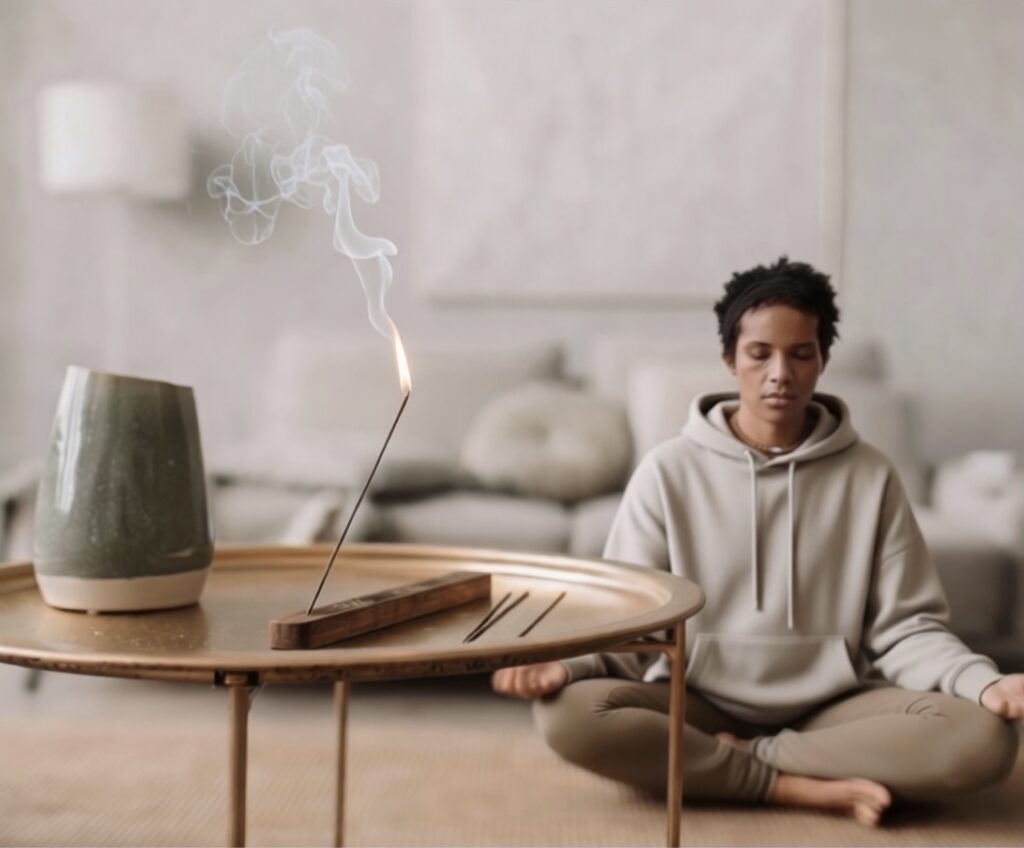
By evening, the body is ready to let go — even if the mind is still carrying the day. How we close the day matters just as much as how we begin it. It reminds me of last night’s weekly community Meditation at RokmilWE—the quiet power of being together and the way presence becomes its own kind of thank-you.
A rushed evening keeps the nervous system alert; a gentle one signals safety, repair, and rest. Research from Harvard Medical School explains how chronic stress keeps the nervous system activated and why intentional evening practices help signal safety and rest.
We often focus on productivity, morning routines, and how to start strong. But the body is listening most closely at night. How we wind down informs how deeply we sleep, how well we repair, and how we wake the next day. Studies shared by the National Institutes of Health highlight how consistent evening routines support deeper sleep and nervous system regulation.
An evening ritual doesn’t need to be elaborate. It doesn’t need candles, lists, or perfection. It can be as simple as slowing the breath, dimming the lights, or washing your face with intention. These small cues tell the body it’s safe to soften. Practicing together has a way of deepening rest, which is why I return each week to meditating in community.

For those who are curious about beginning a Meditation practice gently, learning to meditate at your own pace can be a supportive place to start.
Tonight, you might try this:

- Turn down the lights earlier than usual
- Place one hand on the body and take three slow breaths
- Let the jaw unclench, and the shoulders drop
- Name one thing you’re grateful for before sleep
This isn’t about doing more.
It’s about allowing less.
When we give the nervous system permission to rest, everything benefits — sleep, skin, mood, and the way we meet the day ahead. Evening becomes not an ending, but a gentle return. Research from Harvard Medical School explains how chronic stress keeps the nervous system activated and why intentional evening practices help signal safety and rest.
