
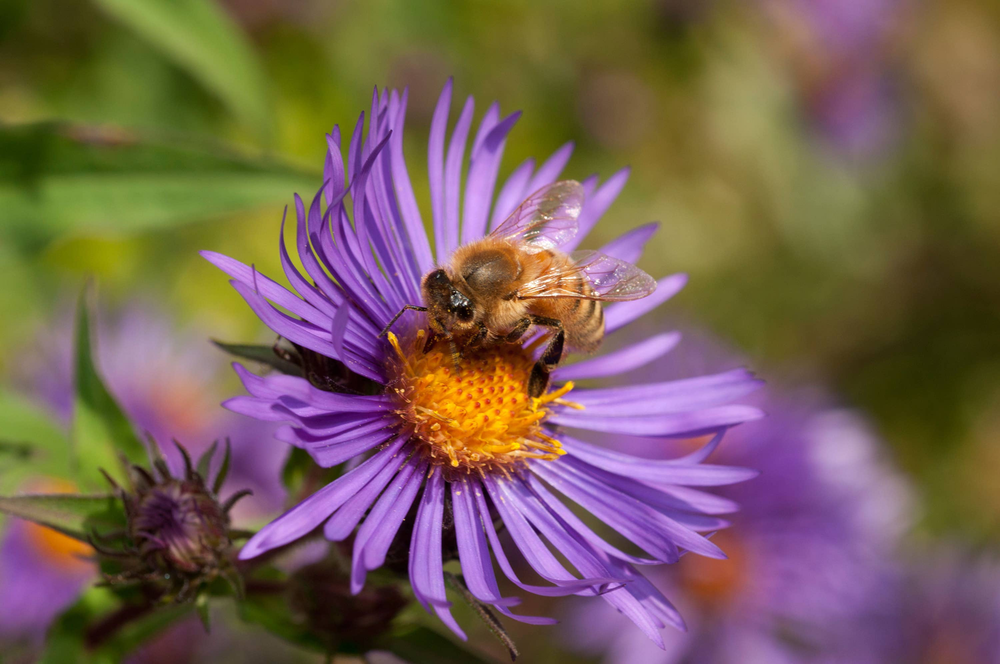
As World Bee Day approaches, make your garden buzz.
As gardeners, we want to see as much beneficial wildlife in our outdoor space as possible, and bees provide us with the feeling of a healthy garden and the hope that thanks to their presence, we’ll have a better chance of a good harvest of edibles.
On the run-up to World Bee Day (May 20), an initiative to raise awareness of bees and other pollinators’ essential role in keeping people and the planet healthy, you can do a few simple things to encourage them to visit your garden.
Plant bee-friendly flowers
There are over 4,000 bee species in the United States, and good planting is essential to attract different types to your garden. Honeybees, for example, have short tongues, so they can access open flowers, such as daisy-like types from the aster family, alliums, clovers, and herbs, including marjoram.
Bumblebees have longer tongues like foxgloves, honeysuckle, bluebells, borage, aquilegia, and lavender.
Umbelliferous plants, which have an umbrella with a mass of floral units with short flowers, including late-flowering sedum, Astrantia, different angelicas, and Cenolophium denudatum, are also a magnet for bees.
For a list of pollinator-friendly plants and to download its plants for pollinators list, visit rhs.org.uk.
Think about what you plant in containers.
Suppose you go for brightly colored bedding in garden centers and DIY shops like Pelargonium, Busy Lizzies, pansies, and Petunias. In that case, you may not do much for your bees, as extensive selective breeding has resulted in some flowers losing nectar. You can make bee-friendly containers using many other plants.
There’s a Cosmos Apollo series with shorter stems that looks great in containers, as do vibrant yellow dwarf rudbeckias. Single dahlias (with flowers that are easier for bees to access than pom or ball varieties) also pack a colorful punch.
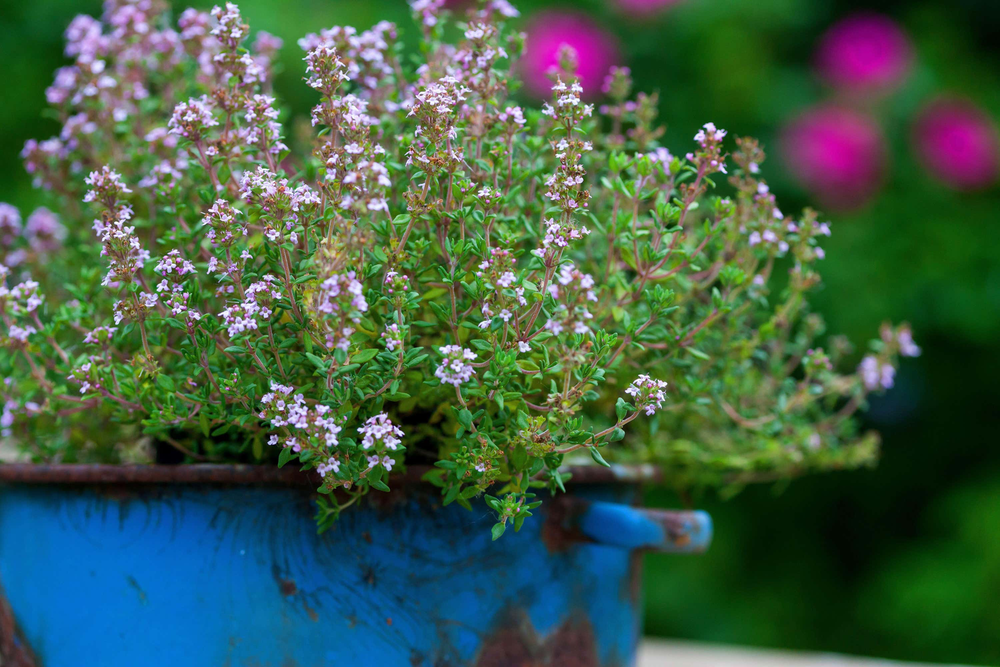
Herbs can also create an abundance of color and fragrance, attracting bees. Lavender, borage, sage, thyme, and rosemary provide pretty flowers, add flavor to your cooking, and keep bees happy.
Bulbs can also do their bit, so think ahead because you’ll need to plant the spring-flowering ones in autumn. Then, in late winter and early spring, bees will go mad for the early nectar and pollen from crocuses, winter aconites, and irises when much of the garden has yet to come to life.
Avoid double varieties
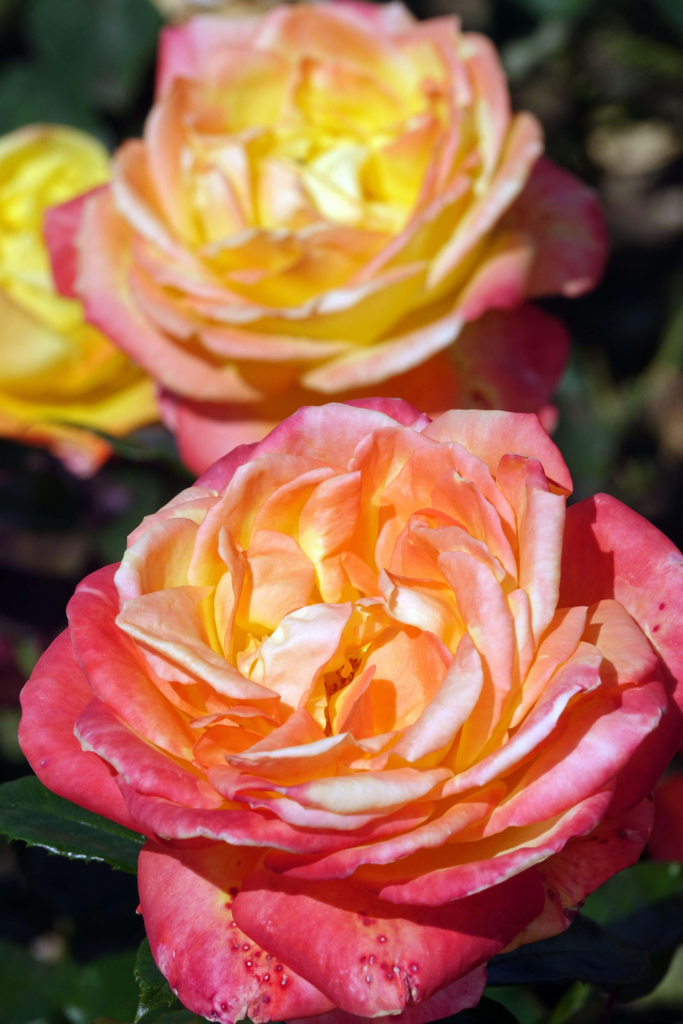
Go for single, open-flowered types, such as daisy-like flowers, because with double varieties, some pollen and nectar are lost as more petals are established.
Some plants that have been heavily hybridized to produce more blousy, bigger blooms have, in the process, made it impossible for bees to access the nectar or pollen, if indeed there is any pollen, because some sterile hybrids don’t produce any.
Keep bees happy in autumn and winter.
While ivy may be a bugbear to some gardeners, it’s manna from heaven to bees, with its nectar-rich flowers in autumn. Single-flowered hellebores, with their pretty, nodding blooms, provide much-needed nectar in winter, as do winter-flowering clematis, bright yellow scented mahonia flowers, and willows, whose catkins provide plenty of pollen for bees.
Leave some weeds
While many gardeners still dig out all visible weeds, there’s a growing movement to leaving some in the grass or flowerbed as a great source of pollen and nectar. Top nectar producers include dandelions and ragwort. Leaving clovers in lawns will also benefit bees.
Provide access to water.
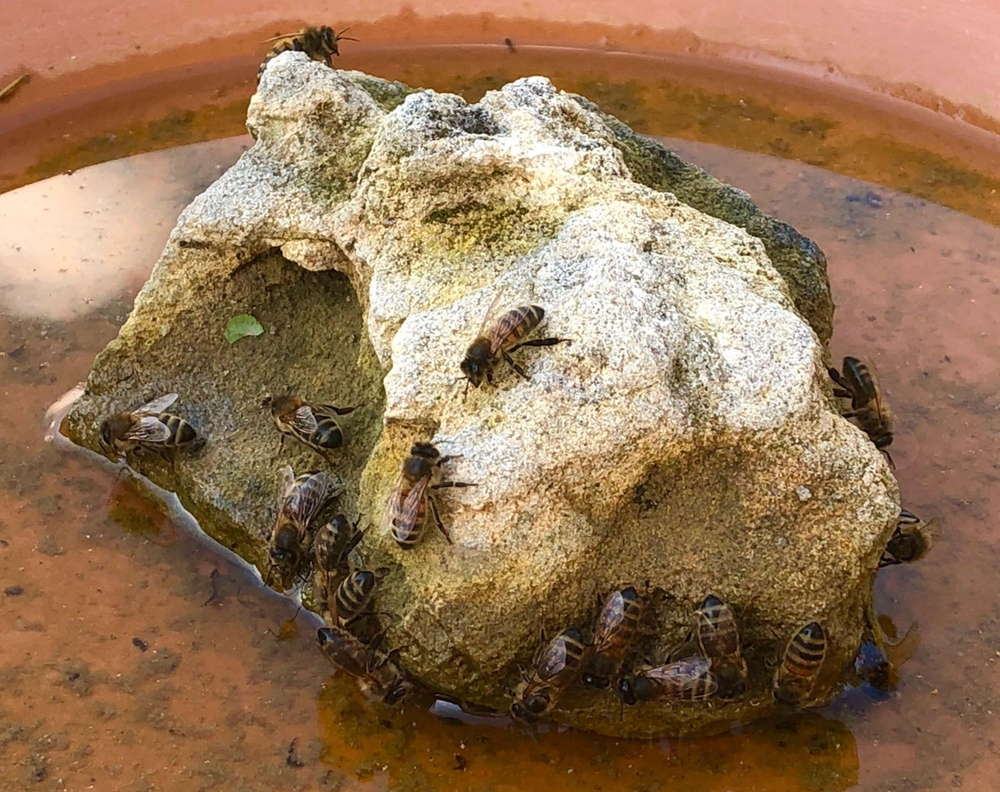
Whether you have a pond in your garden or a saucer on your balcony, ensure bees can get in and out of it quickly. If they can’t swim, they will drown. Put some stones or pebbles strategically so they can easily access and exit the water.
Don’t use chemicals
Avoid chemicals at all costs, even if aphids are running amok. You can squirt them off with soapy water or, wearing gloves, run your fingers down the stems where you see them to keep them at bay. Pesticides can be deadly for bees that are feeding on sprayed plants.
Consider a wild patch.
The ‘rewilding’ debate continues, but if you have space, leave a patch at the back of the garden to do its thing—weeds, wildflowers, and long grass will all provide food and shelter for bees.
Provide shelter
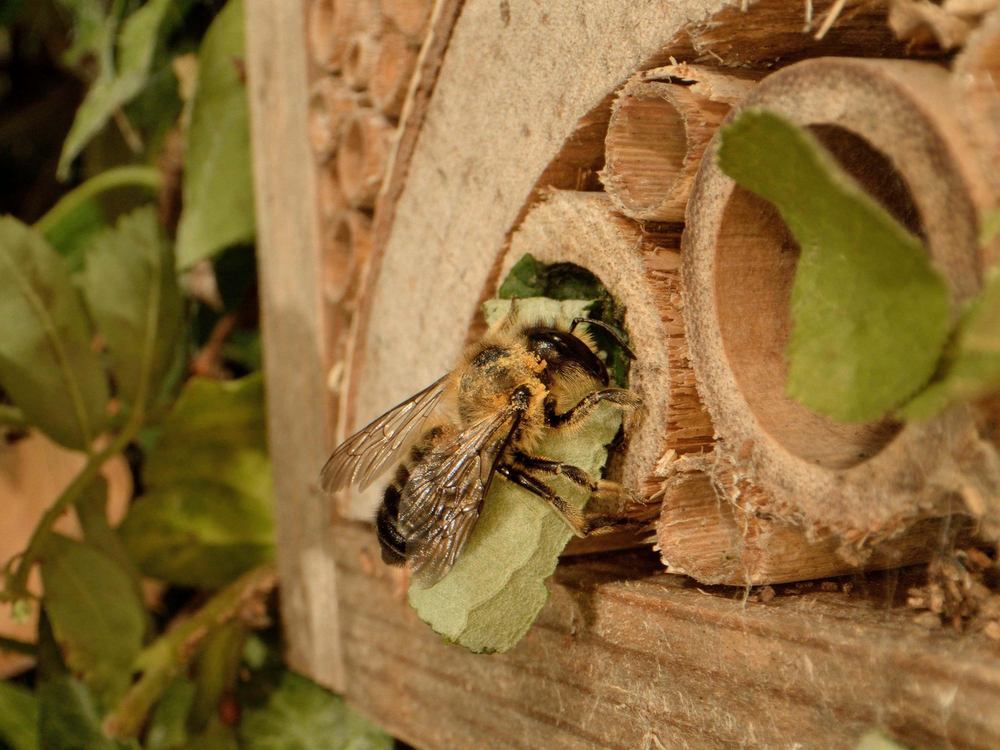
Solitary bees need ideal nesting sites to lay eggs and are attracted to holes in wood. You could buy a bee house or make your own from hollow bamboo canes tied with string and inserted into a secure frame. All the adults generally die off before winter, and the females leave their eggs sealed inside a nest in a cavity or burrow, provided with pollen and nectar food stores.
Honeybees are the only bee species in the UK that overcome winter as a colony, whereas, with bumblebees, only the queen survives winter.
Queen bumblebees hibernate underground in loose soil or banks of earth, burrowing into soft earth or under logs and stones to escape the frost. So don’t tidy up too much. Leave piles of twigs and branches where they are as easy shelters for hibernation.
Become a beekeeper
There’s a growing interest in beekeeping, but if you’re a beginner, seek advice to understand the safety and basic knowledge of beekeeping. You can do an online course or contact one of over 270 beekeeping area associations that serve their local community with support and education. For details of beekeeping experiences and training courses, visit The New York Beekeepers Association.
