
Exploring the Traits and Challenges of the Empath’s Personality
As someone who naturally feels deeply, I’m grateful for spaces like this—places where I can connect with people who value compassion, self-awareness, and inner growth. If you have an empath personality, my sensitivity has made me reflective by nature, and that reflection has turned me into a lifelong seeker—especially around the question many of us carry quietly: Who am I, really?
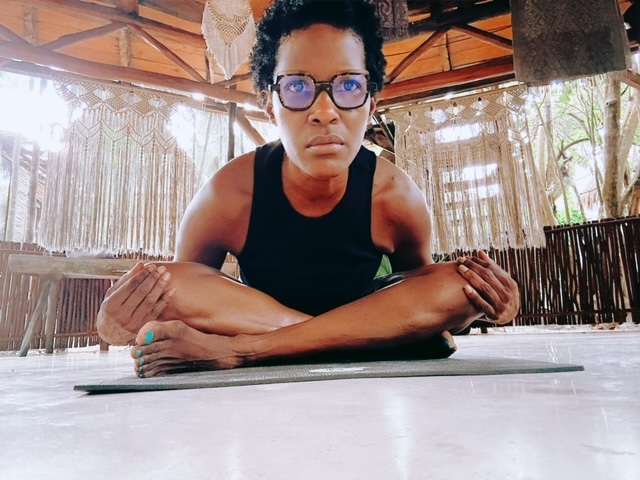
Over time, yoga and meditation have helped me see that self-knowledge isn’t a destination. It’s a relationship—one that deepens as we learn to listen, soften, and stay present with what’s true.
The Seeker in Me
Being a seeker isn’t just something I do—it’s how I move through life. I’ve always been curious about the unseen: why we’re here, how healing happens, and what it means to live with purpose. This path has taught me that awareness is built slowly, through practice—through breath, stillness, and the willingness to meet ourselves honestly.
And here’s what surprised me most: as we understand ourselves more clearly, we tend to show up more lovingly for others—without losing ourselves in the process.
My journey into meditation + mindful living
What Is an Empath?
“Empath” is a popular term, but at its heart is something very real: empathy—the ability to sense and understand what someone else may be feeling. Researchers often define empathy as sensing another person’s emotions while also imagining their inner experience. The APA similarly describes empathy as understanding someone from their frame of reference rather than your own.
Empaths often experience this as:
- picking up on the emotional “tone” of a room
- noticing subtle shifts in mood or energy
- feeling impacted by other people’s stress, grief, or joy
- intuitively sensing what’s not being said
Many empaths are also deeply moved by beauty, music, nature, and meaning—sometimes in ways that are hard to explain.
Greater Good Science Center’s empathy definition — What empathy is (and isn’t).)
The Gift: Compassion That Feels Natural
I’ve always been someone who wants to help. Even when I was young, if I saw someone struggling, something in me reached toward them. It didn’t feel like a “good deed.” It felt like the most human response.
As a teenager, I often felt emotionally on my own—navigating a home environment that didn’t always feel supportive or safe. And still, my heart kept leaning toward other people’s pain. I remember someone once asking me what I got out of helping others—and I was honestly stunned. It hadn’t occurred to me that care could be transactional.
With time, I realized: not everyone experiences life through empathy. Some people simply don’t feel what others feel.
And that’s where the empath’s journey becomes sacred: learning how to keep your heart open without abandoning yourself.
The Challenge: When Sensitivity Becomes Too Much
The same gift that makes an empath tender and intuitive can also become heavy. When you feel so much, it’s easy to:
- absorb emotions that aren’t yours
- over-give (and then crash)
- confuse compassion with responsibility
- struggle to say no
- feel emotionally “flooded” in busy or intense environments
Without boundaries, empathy can drift into exhaustion.
Healthy boundaries are not walls—they’re clarity. They’re the limits we set through action and communication so we can stay well.
How I Stay Grounded: Practices That Protect the Gift
What’s helped me most is learning to regulate my nervous system and return to myself—again and again. Self-regulation skills support steadier emotional responses and healthier choices over time.
Here are a few practices I return to:
- Meditation as energetic hygiene (I release what isn’t mine)
- Yoga to come back into my body (presence over overthinking)
- A simple boundary phrase: “Let me sit with that and get back to you.”
- Less urgency (not everything needs an immediate emotional response)
- Nature + quiet (sensory soothing resets my system)
- Journaling (especially: What am I feeling vs. what am I picking up?)
- A consistent wind-down ritual (protecting my evenings like sacred space)
Harvard Health also notes that practices like breathing, repetition, and yoga can help counter the stress response and support calm.
Join Me: Weekly Meditation (Stream + RSVP)
If you’re an empath—or simply someone who feels a lot—you don’t have to carry it alone. I host a weekly meditation space designed to help you unwind, reset, and return to peace.
Meditate With Michelle (weekly)
(Insert your stream/RSVP link here — use as a button or bold CTA.)
(Internal link suggestion: your Meditation page if you have one. External/registration link: your Luma page.)
Closing: Empathy as a Strength
Being an empath is a beautiful, powerful quality. It allows you to connect deeply, love generously, and offer comfort in a world that often feels rushed and disconnected.
But the lesson isn’t to feel less.
It’s to feel wisely.
When empathy is paired with boundaries, it becomes sustainable. When sensitivity is supported by practice, it becomes radiant—like ageless beauty from the inside out.
