
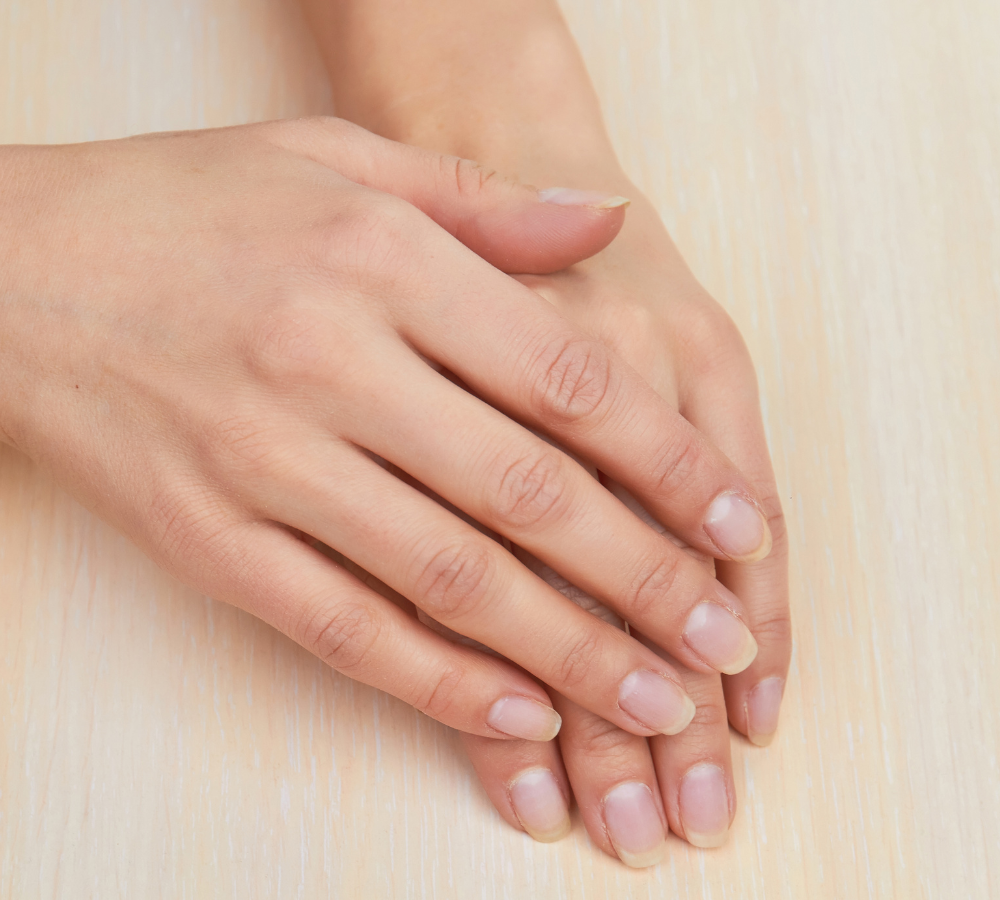
From pronounced ridges to fragile nail beds – here’s how menopause affects your nails and how to address it.
Menopause significantly affects your hormones, which in turn influences the appearance and texture of your skin, nails, and hair.
Perimenopause is the transition leading up to menopause. During this time, you may begin to notice small changes in your body. This process usually starts in your mid-40s and lasts, on average, from four to eight years.
Menopause typically begins around the age of 51 and is defined as having gone 12 months without a menstrual period.
While you might be familiar with hot flashes, brittle nails, dehydration, and skin flakiness are also common symptoms of menopause.
Top nail technicians and women’s health experts discuss how menopause affects your nails and what measures you can take to maintain a healthy manicure.
The impact of menopause on nail health
During perimenopause and menopause, the fluctuations in hormones – particularly the drop in oestrogen – can significantly impact nail health.
“Estrogen is essential for maintaining hydration in the body, including your nails,” explains Paint Nails lead nail tech Angie Campbell.
As estrogen levels drop, nails often lose their natural moisture and become more brittle. These changes may be less noticeable during perimenopause, but as menopause starts, the effects can become more evident.
“Women may notice thinning, peeling or slower nail growth as their nails struggle to retain strength and hydration,” says Campbell.
Why your nails become brittle and prone to breakage
“Brittleness of the nails is also called Onychorrhexis from the Greek derivation onycho – meaning ‘nail’, and rhexis – meaning ‘bursting’,” explains menopause advisor for A.Vogel, Eileen Durward.
This terminology makes sense when the main indication of having brittle nails is when they begin to split, crack or chip. “The yellowing of nails or nails curling at the top also suggests that they are brittle,” says Durward.
Keratin is the material produced in the nail bed, acting as the protein that forms the strong outer layer of your nails.
“When the body is healthy, nails are strong and well-formed. If your nails show signs of brittleness, it indicates an imbalance in keratin production,” says Durward.
How to keep a strong and hydrated manicure
Hydration is essential for maintaining a strong and healthy manicure, which unfortunately tends to decline during menopause. “Start with a quality cuticle oil – look for products that contain jojoba oil, vitamin E, or almond oil,” advises Campbell. “Applying it daily helps restore moisture and strengthens the nail bed.
A hydrating hand cream is essential because it helps restore damaged nails and strengthens them against breakage.
How to adjust your nail-care routine
If you notice that your nails are becoming thinner or more brittle, prioritize rest and gentler care in your nail routine. “Opt for a glass or crystal nail file instead of traditional emery boards to minimize micro tears,” suggests Campbell.
“Use a glass or crystal nail file instead of traditional emery boards to reduce micro tears,” suggests Campbell.
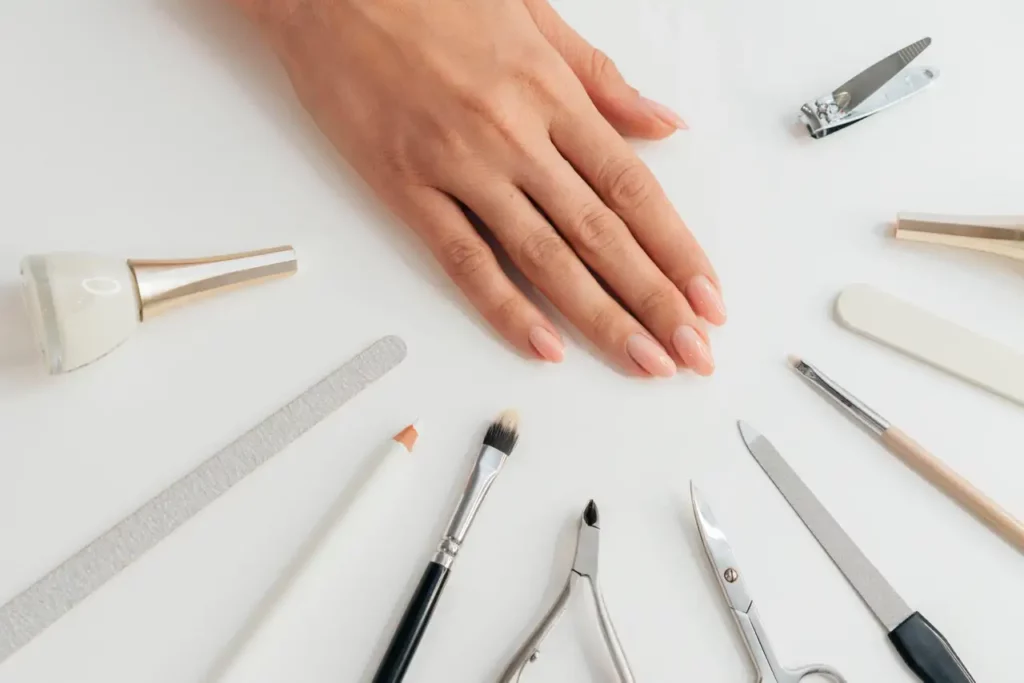
“Apply a strengthening base coat regularly, to Resist, to provide added support, and avoid over-trimming or aggressive cuticle pushing to prevent damage to the nail matrix.”
If you have a penchant for gel or acrylic manicures, Campbell advises taking regular breaks to allow your nail beds time to recover and breathe.
Just like removing make-up at the end of the day, it’s important not to constantly have your nails covered.
Things to avoid
There are several habits to adopt that can help protect your nails from daily wear. “Always wear gloves while performing household chores, especially those involving water or chemicals, as excessive exposure can dry out and weaken your nails,” explains Campbell.
“Avoid filing or buffing too much, as this can thin the nail plate.
Additionally, be cautious with gel or acrylic applications, allowing your nails to ‘breathe’ between treatments.”
Instead, opt for basic polishes with a gel effect. These are less harsh on your nails, and you can apply a topcoat to ensure your color lasts as long as a traditional gel manicure.
