
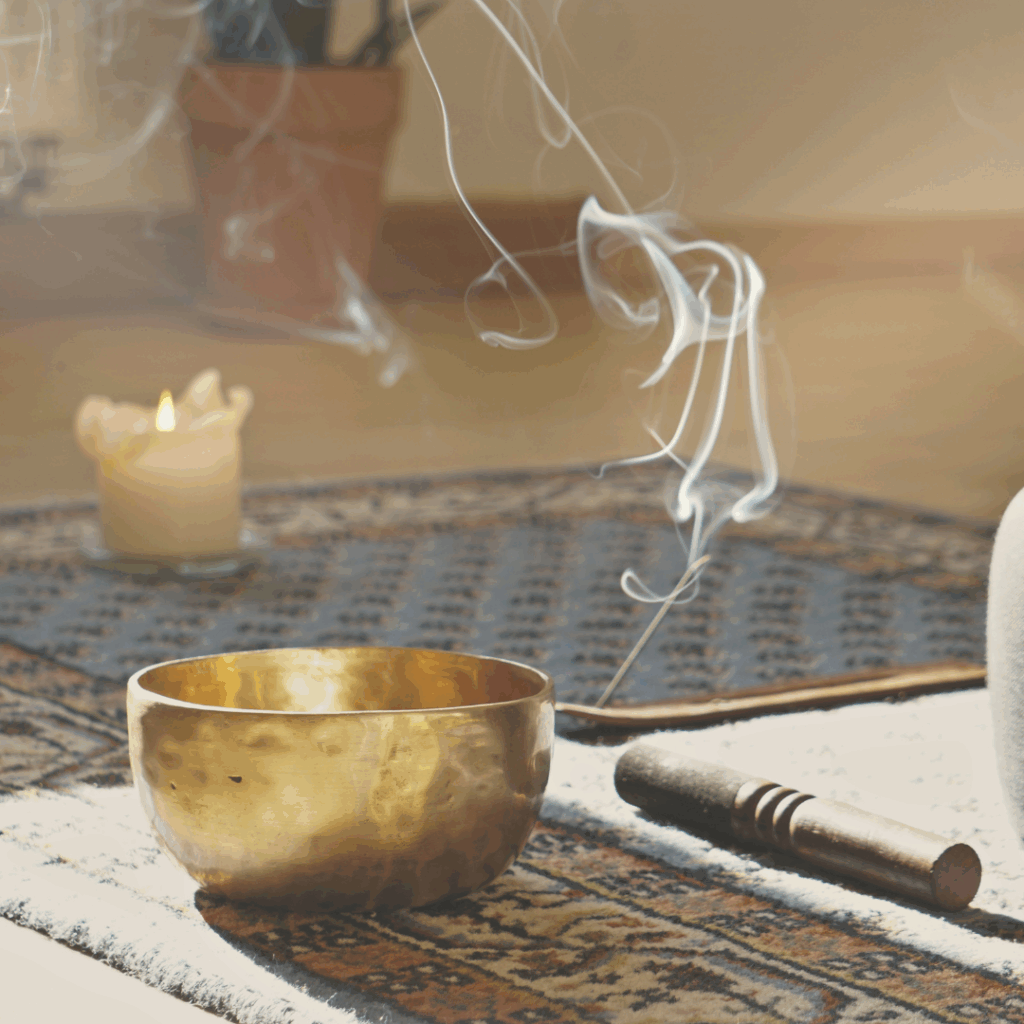
The Four Yogas explained.
When most people think of yoga, they envision physical postures and stretches. However, in the classical Indian tradition, yoga represents much more—it is a comprehensive philosophy of life and self-discovery. At its core are the Four Paths, or four spiritual disciplines. Each path meets the seeker where they are, offering distinct ways to connect with truth, spirit, and the divine. The concept of the Four Paths comes from the Bhagavad Gita, one of the foundational texts, where Lord Krishna teaches that individuals have different dispositions and temperaments. Therefore, there are various routes to the same destination: self-realization and union.
🌿 Karma – The Path of Action

What: Karma is the yoga of selfless service. It is about acting without attachment to the results, offering your work as service rather than for reward.
Who it’s for: Those who feel called to contribute, help, and uplift others—people who find meaning in action, work, and community service.
Where it’s practiced: In daily life—whether through volunteering, mentoring, or simply offering kindness in everyday interactions.
Why it matters: Karma Yoga transforms ordinary tasks into spiritual practice. By acting with intention and without expectation, we purify the heart and dissolve the ego.
How to practice:
- Serve without expectation of reward.
- Dedicate your work to something higher than yourself.
- See every action, even small ones, as sacred.
🔗 Learn more: Karma Yoga – Yoga Journal
💛 Bhakti – The Path of Devotion
(love and surrender)
Bhakti is the yoga of love and devotion. It is the path of surrender, prayer, chanting, and cultivating gratitude.
- Who it’s for: Those drawn to love, faith, and surrender.
- Why it matters: Bhakti softens the ego and opens the heart.
- How to practice: Chant mantras, express gratitude daily, and see divinity in people and nature.
🔗 Learn more: Bhakti Yoga
📚 Jnana – The Path of Wisdom,
Jnana is the yoga of self-inquiry. It invites us to ask: Who am I? What is real? What is eternal?
- Who it’s for: Philosophical minds and seekers of truth.
- Why it matters: It helps us distinguish between the eternal and the temporary, and uncover self-knowledge.
- How to practice: Study sacred texts, reflect in silence, and practice self-inquiry.
🔗 Learn more: Jnana Yoga – Vedanta
🧘 Raja – The Path of Meditation
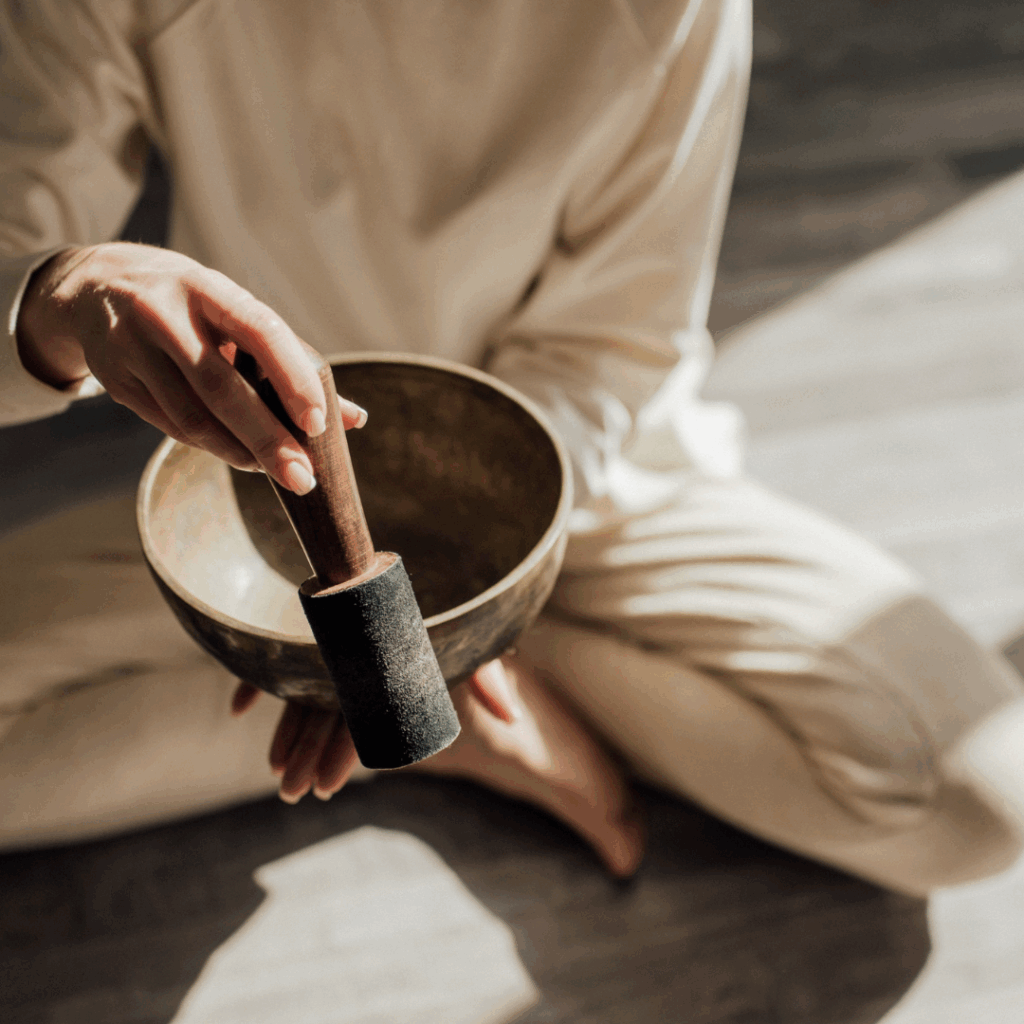
Raja is the yoga of discipline and Meditation. Known as the “royal path,” it focuses on calming the mind through concentration, Meditation, and the Eight Limbs of Yoga.
- Who it’s for: Those drawn to Meditation and inner silence.
- Why it matters: It brings clarity, steadiness, and union with the higher self.
- How to practice: Meditate daily, practice pranayama, follow ethical living, and cultivate stillness.
🔗 Learn more: Raja Yoga – Vedanta
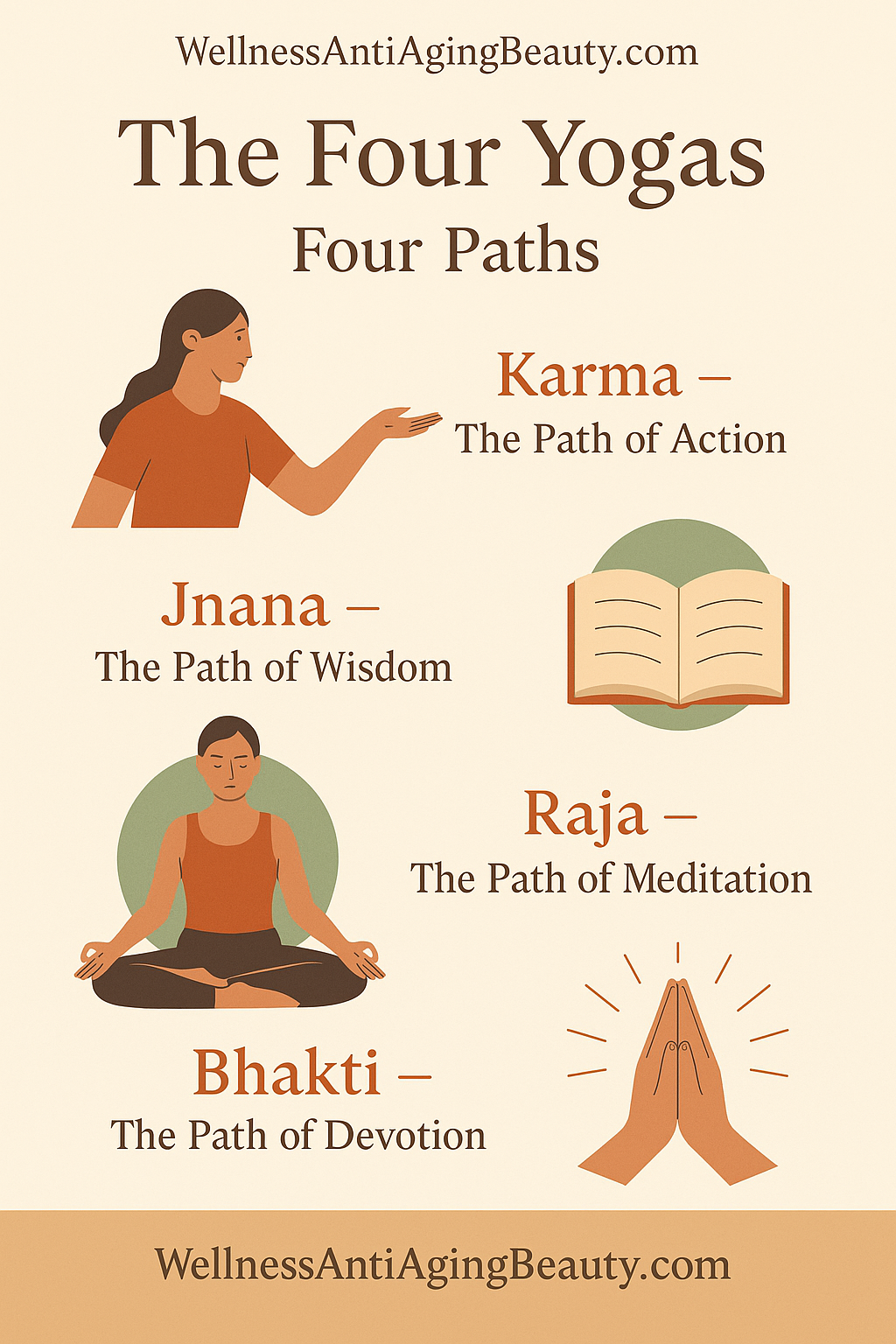
🌸 My Understanding and Discovery of the Four Yogas
My journey has always been about understanding my true self. For years, I thought of my practice as Meditation, rituals, and seeking—but over time, I discovered I had been living the Four Yogas my entire life.
That realization deepened my spiritual seeking, providing a deeper understanding of how these paths intersect in daily life: through service, devotion, wisdom, and stillness. By writing and speaking about this discovery, I believe I am stepping into my purpose—to share, guide, and hold space for others on their own yoga path.
✨ Four Paths, One Goal
While each path is unique, they are not separate from one another. In fact, most practitioners weave them together. A person may serve through Karma Yoga, pray through Bhakti Yoga, study through Jnana Yoga, and meditate through Raja Yoga—all in the same day.
The goal of all four yogas is the same: union, balance, and self-realization. They remind us that it is not just something we do on the mat—it is a way of living, serving, loving, seeking, and being.
Key Takeaways
- The Four Yogas explained highlight distinct paths to self-realization in yoga: Karma, Bhakti, Jnana, and Raja.
- Karma emphasizes selfless action for the upliftment of the community, while Bhakti focuses on love, devotion, and surrender.
- Jnana invites self-inquiry and wisdom, asking profound questions about identity and reality.
- Raja emphasizes Meditation and discipline, aiming for clarity and connection to the higher self.
- All paths interconnect, collectively leading to unity, balance, and a deeper understanding of yoga as a way of living.
