

Sometimes change arrives gently, giving us time to adjust. And then there are moments when it comes suddenly—shifting a familiar rhythm, a place we love, or a community that has felt like home.
Our community is moving through one of those moments now. There is uncertainty, sadness, and the understandable desire to know what will happen next. When something that has helped hold us begins to change, we may feel as if the ground beneath us is changing too.
I have been sitting with that feeling—not trying to rush past it or cover it with easy answers. What keeps returning to me is this:
When the ground shifts, we are invited to discover what truly grounds us.
Staying grounded during times of change does not mean pretending that everything is fine. It does not mean denying grief, disappointment, fear, or confusion. It means learning how to remain present with ourselves as life takes a shape we did not expect.
Why Change Can Feel So Unsettling

We often build a sense of safety around what is familiar: a place, a relationship, a weekly ritual, or the people we expect to see. These familiar patterns help us feel oriented. When they change, even if we are not directly responsible for what is happening, the body can register the uncertainty.
Stress may appear as shallow breathing, tight shoulders, interrupted sleep, racing thoughts, sadness, irritability, or the urge to find answers immediately. The American Psychological Association recommends focusing on what is within our control, leaning on support, and treating ourselves with kindness when uncertainty feels stressful.
This is not weakness. It is part of being human.
As I shared in How to Regulate Your Nervous System During Seasonal Transitions, the nervous system is always receiving information from our surroundings. It notices disruption, changing routines, and emotional tension—sometimes before the mind has found words for what it feels.
We cannot always control the change around us. But we can create small signals of steadiness within us.
Staying Grounded Does Not Mean Standing Still
We sometimes imagine grounding as being immovable: strong enough not to bend, feel, or be affected. But that is not what nature teaches us.
A tree is rooted, but it still moves with the wind. Its strength does not come from refusing to move. It comes from being anchored deeply enough to move without losing its connection to the earth.
We can practice that same kind of steadiness.
Being grounded means allowing ourselves to feel what is real without letting fear carry us entirely into the future. It means acknowledging that something matters to us. It means remembering that uncertainty is not the same as immediate danger a,nd that we do not need to solve tomorrow before we live today.
Sometimes the most grounded words we can offer ourselves are:
I do not know what comes next, but I am here now.
How to Stay Grounded During Change
1. Begin With the Body
When the mind is moving quickly, begin with something physical.
Place both feet on the floor. Notice the support beneath them. Soften your knees. Relax your jaw and lower your shoulders. Feel the chair, mat, floor, or earth holding your weight.
You do not have to think your way back into the present. Sometimes you can feel your way back.
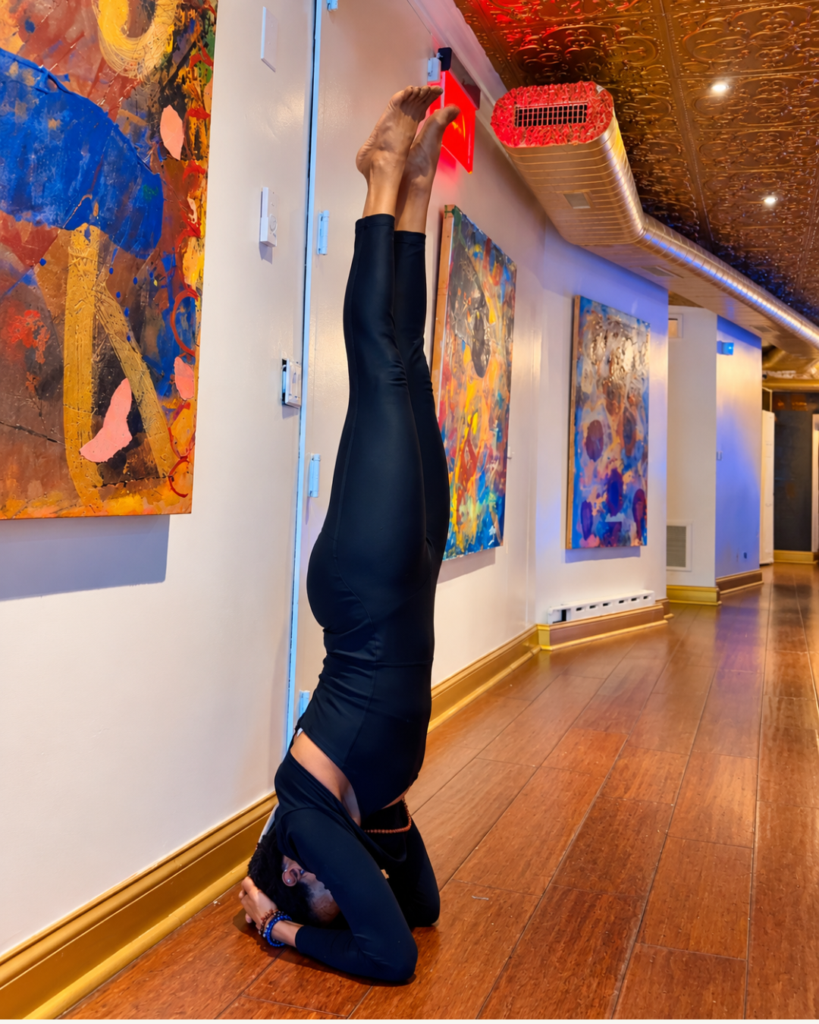
Yoga gives us a physical language for this return. Mountain Pose may look simple, yet it asks us to stand with awareness: feet rooted, spine rising, breath moving, body present. Supported movement can also remind us that receiving help does not make us less strong. It allows us to explore change without abandoning stability.
If you are returning to movement after time away, How to Return to Yoga After a Break offers four gentle ways to begin again.
2. Let the Breath Become an Anchor

You do not need to force a deep breath. Begin by noticing the breath you already have.
Then, if it feels comfortable, allow the exhale to become slightly longer:
- Inhale gently for a count of four.
- Exhale slowly for a count of six.
- Repeat for five rounds without straining.
The National Center for Complementary and Integrative Health explains that relaxation practices can help bring about the body’s relaxation response, which is associated with slower breathing, a reduced heart rate, and lower blood pressure.
The breath does not erase the situation. It creates a little more space within us to meet it.
3. Stay Close to the Present
Uncertainty pulls the mind forward. We begin imagining every possible outcome, having conversations that haven’t happened, and preparing for losses that may not come in the way we fear.
When you notice this, return to what is true now.
Ask yourself:
- What do I know in this moment?
- What am I assuming?
- What needs my attention today?
- What can wait until I have more information?
Presence does not mean we stop planning. It means we stop asking fear to write the entire future.
4. Keep One Meaningful Ritual
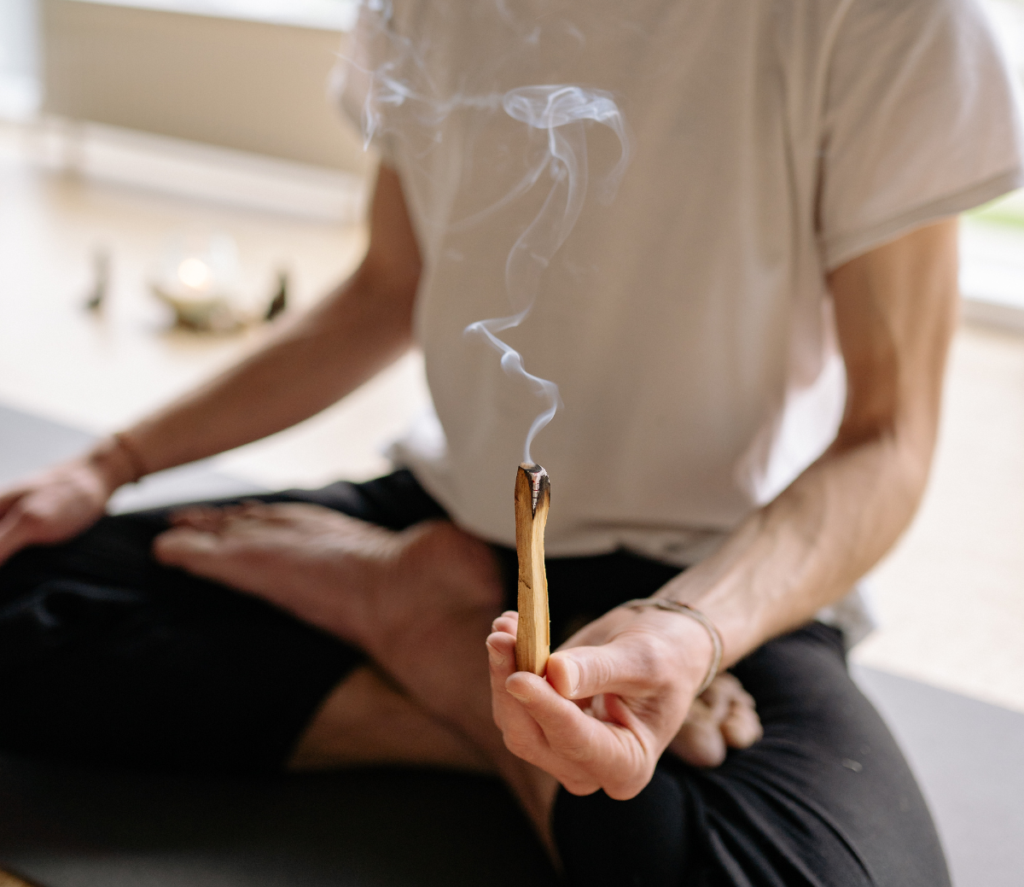
During change, you may be tempted to either hold tightly to everything or let every routine fall away. Instead, choose one small ritual that reminds you who you are.
It might be:
- Five quiet minutes in the morning
- Lighting a candle before Meditation
- Taking a walk without your phone
- Practicing three grounding yoga postures
- Drinking tea before bed
- Writing one sentence of gratitude
- Gathering with people who help you feel supported
A ritual does not need to be elaborate. Its power comes from the message it sends: I am still here. I can still care for myself. I can return.
If sitting quietly feels supportive, What Is Meditation? A Gentle Return to Yourself offers a simple place to begin.
5. Let Community Be Part of the Ground

When a shared space changes, people may worry that the community itself will disappear. But community is more than a building, a schedule, or one set of circumstances. It is the care we have practiced together. It is the way we breathe beside one another, hold space, laugh, listen, and return.
We do not have to process change alone. Reaching out to one another does not require choosing sides, repeating private details, or pretending not to feel. Compassion does not depend on knowing everything. Together, we can honor what has been created while allowing the next chapter to reveal itself in its own time.
For me, continuing to gather for yoga and Meditation is not about ignoring what is happening. It is a way of meeting this moment consciously. Practice gives us a place to put the feelings that may be difficult to name. It reminds us that even in uncertainty, we can still breathe together.
6. Make Room for Grief and Gratitude
Change can hold more than one truth.
We can feel grateful for what a place or community has given us while still grieving what may be changing. Loving what has been does not prevent us from remaining open to what comes next. Even when we feel unsettled, moments of peace can still find us.
There is no need to rush into a positive interpretation. Spiritual practice is not a demand to bypass pain. It is an invitation to meet the whole experience with awareness and compassion.
As I wrote in Rest Is Part of the Practice, sometimes wisdom is found in becoming still. We do not always need an immediate answer. Sometimes we need enough quiet to hear what this moment is asking of us.
A Simple Grounding Practice for Uncertain Moments
Find a comfortable seat or stand with both feet on the ground.
Place one hand over your heart and the other over your lower belly. If closing your eyes is uncomfortable, soften your gaze.
Notice three points of contact between your body and the surface supporting you.
Take a gentle breath in.
Let your exhale be slow and unforced.
Silently repeat:
I am here.
Support is all around me.
This moment can be met without knowing everything that comes next.
Stay for several breaths. Let the ground carry some of what you have been holding.
The Ground Within Us
Places matter. Relationships matter. Shared rituals matter. When they change, we feel it because we have loved, invested, and belonged.
But the peace we have practiced together does not belong only to one room. The strength built through movement does not disappear when circumstances shift. The awareness cultivated in Meditation is not confined to the cushion.
The practice comes with us.
Perhaps this is what staying grounded during change truly means: not insisting that life remain the same, but remembering that we have roots deeper than the present disruption.
We can honor what has been. We can care for one another now. And we can allow what comes next to unfold without losing our connection to ourselves.
The ground may shift.
But the practice remains.
With love,
Michelle
