
A product can be beautiful on the shelf and still be wrong for your skin.
A cream someone loves may feel too heavy on you. A cleanser leaves your face uncomfortable. One area feels dry while another becomes oily.
Before adding another product, ask a simple question: What is my skin type?
Understanding your skin type gives you a starting point for choosing care that suits you. For me, that starts with paying attention to my skin today and letting my choices reflect what I notice.
What Is My Skin Type?
Skin types describe common patterns of oiliness, dryness, and sensitivity. These categories can help guide your choices, although your skin may not fit neatly into one description.
The American Academy of Dermatology’s guide to basic skincare describes five commonly used categories:
| Skin type | What you may notice |
| Dry | Skin often feels rough, flaky, itchy, or tight. |
| Oily | Skin frequently looks shiny or feels greasy. |
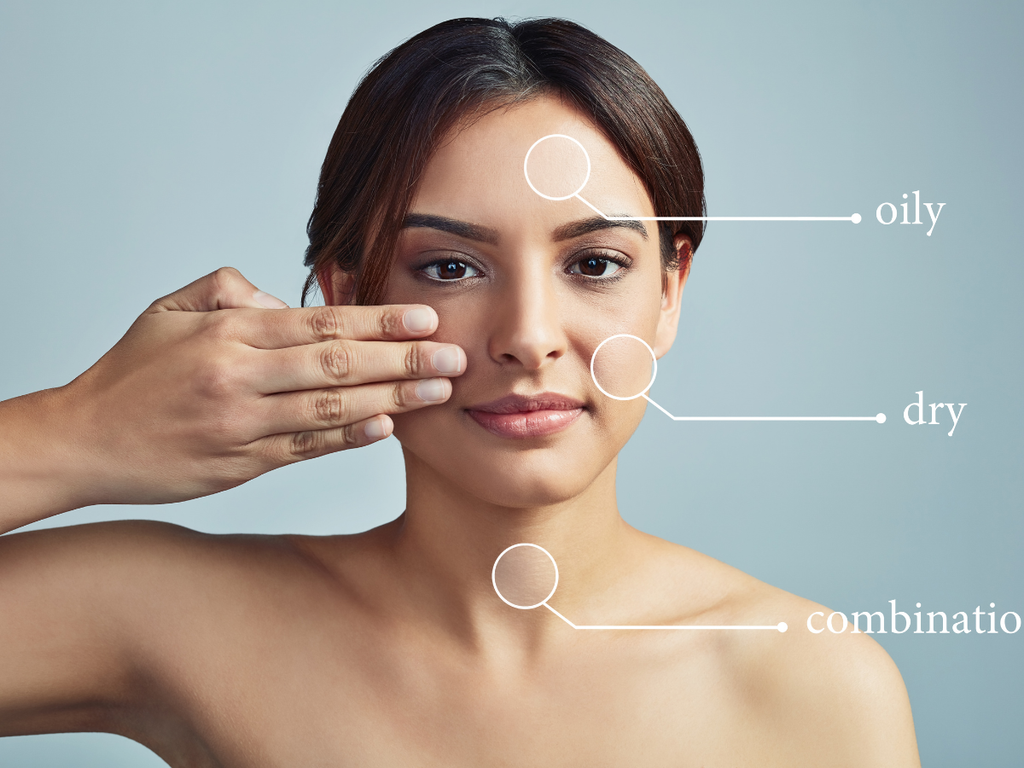
| Combination | Some areas are oily while others are dry. |
| Normal | Skin generally feels comfortable, without pronounced dryness, oiliness, or sensitivity. |
| Sensitive | Products may cause stinging, burning, or irritation. |
“Normal” is simply a skincare term. It doesn’t measure how healthy or beautiful your skin is.
Sensitivity can also accompany oily, dry, or combination skin. You may need to consider both how oily your skin feels and how easily it becomes irritated.
What My Own Skin Taught Me

I learned about my own combination skin through trial and error. My forehead would feel very dry while the rest of my face was oily. A rich moisturizer that seemed ideal on my forehead brought on breakouts when I used it elsewhere.
Over time, I learned to pay attention to each area rather than treating my whole face the same way. That experience revealed to me that customized skincare can be as simple as noticing where a product feels beneficial and where you may need a different approach.
It also reminded me to peer beyond the label on the jar; how my skin reacts matters.
How to Assess Your Skin Type
Begin by noticing patterns during your usual day.
How does your skin feel after gentle cleansing? Where does shine appear? Are some areas comfortable while others feel dry? Does a particular product repeatedly cause discomfort?
Look for what happens consistently rather than deciding from one unusual day.
You might keep a few brief notes:
- Where does my skin feel dry?
- Where does it become shiny?
- Which products feel comfortable?
- Does irritation follow a particular product or step?
Avoid scrubbing, washing repeatedly, or leaving uncomfortable skin without moisturizer just to “test” it. These actions can affect what you observe.
If your skin has changed recently, consider whether you introduced something new. A product reaction does not necessarily reveal your usual skin type.
My article on why skin changes with the weather explores environmental changes separately. Here, the aim is to understand your skin’s usual pattern.
If you remain unsure, a board-certified dermatologist can help identify your skin’s needs.
Choose Care That Suits Your Skin
Custom skincare can begin with a few thoughtful choices. Your moisturizer’s texture, your cleanser’s gentleness and how your skin reacts to a product matter more than how many steps you follow.
For Dry Skin
Choose a gentle cleanser and a moisturizer that leaves your skin feeling comfortable.
Creams are generally richer than lotions or gels and may suit dry skin better. Apply moisturizer after washing while your skin is still slightly damp.
The AAD’s guide to choosing a moisturizer explains how different textures meet different needs.
Notice whether comfort lasts between applications. Persistent cracking, itching, or soreness deserves professional attention.
For Oily Skin
Look for products labeled “oil-free” or “noncomedogenic,” meaning they are formulated not to clog pores.
A lightweight moisturizer may feel more comfortable than a rich cream. Oily skin still benefits from moisturizing.
Resist the urge to scrub away every trace of shine. The AAD’s guidance for oily skin recommends gentle cleansing and continued moisturizing.
For Combination Skin
Your entire face may not need the same amount or texture of moisturizer.
You might prefer a lighter formula on oily areas and a richer cream only where your skin feels dry.
Combination skin is often described as an oily forehead, nose, and chin with drier cheeks. My own experience was different: my forehead needed more moisture than the rest of my face.
Use those common descriptions as a starting point, then notice your own pattern. Let what you observe guide where you apply each product.
For Normal Skin
If your skin generally feels comfortable, keep your care consistent and manageable.
A gentle cleanser, suitable moisturizer, and sun protection provide a useful foundation. You don’t need to introduce stronger products just because they are popular.
For Sensitive Skin
Look for gentle, fragrance-free products and add new products individually so you can more easily notice a reaction.
“Natural” does not automatically mean gentle. Plant ingredients and fragrances can irritate some people’s skin.
Repeated burning, itching, or a rash is a reason to stop using the suspected product and seek advice, especially if symptoms persist.
Keep a Simple Foundation


Across skin types, cleansing, moisturizing, and sun protection remain useful basics.
For daytime protection, the AAD recommends a broad-spectrum, water-resistant sunscreen with SPF 30 or higher. Choose a texture you can comfortably apply, and follow the directions for use and reapplication.
If you would like a wider framework for organizing these essentials, explore my skin longevity basics.
Once that foundation feels comfortable, you can decide whether a specific concern needs additional care.
Common Misunderstandings About Skin Types
“Oily skin does not need moisturizer.”
It does. Choosing a lighter formula can make moisturizing more comfortable.
“Tight skin means my cleanser worked well.”
Tightness is worth noticing. Cleansing should remove buildup without leaving your skin persistently uncomfortable.
“Sensitive skin needs natural products.”
Ingredient labels deserve more attention than marketing language. Fragrance-free products may be a better starting point for sensitive skin.
“Combination skin looks the same on everyone.”
Oily and dry areas can be in different places. Pay attention to your own face rather than expecting it to match a diagram.
“My skin type tells me everything.”
Skin type is only part of the picture. Acne, eczema, rosacea, and other conditions may need care beyond a general routine.
“A product that works for someone my age should work for me.”
Age alone does not determine which formula will suit you. Two people of the same age can have very different skin needs.
Let Understanding Guide Your Choices
I believe beauty care is more meaningful when we take the time to understand ourselves.
Knowing your skin type helps you choose with more intention. You can look beyond a beautiful jar or an enthusiastic recommendation and consider how a product fits your own experience.
My own trial and error taught me to be more thoughtful about what I apply and where. Sometimes a small adjustment makes a familiar routine seem more suitable.
Notice your patterns. Choose thoughtfully. Let yourself leave behind a product that doesn’t feel right.
Your skin warrants care that meets it where it is.
Key Takeaways
- Understanding your skin type is essential for choosing the right skincare products.
- Skin types include dry, oily, combination, normal, and sensitive, each with specific characteristics.
- Observe how your skin reacts to different products over time to assess your skin type accurately.
- Choose products based on your skin’s needs, focusing on factors like texture and gentleness.
- Common misconceptions about skin types can lead to improper care; prioritize what works for your unique skin.
