

Some days, our skin tells the story before we do.
A restless week may show up as dullness, sensitivity, dryness, or an unexpected breakout. A stressful season may leave us touching our face more often, sleeping less deeply, or rushing through the very rituals that usually help us feel cared for.
This does not mean every skin concern begins in the mind. Skin is influenced by age, hormones, genetics, health conditions, medications, environment, sun exposure, and the products we use. But our mental and emotional state can be part of the picture—especially when stress affects our sleep, habits, inflammation, and consistency.
This is where mindfulness and skincare meet.
Mindful skincare is not about believing we can meditate a skin condition away. It is about noticing the connection between how we feel, how we care for ourselves, and what our skin may be asking for. It turns a routine built around correction into a ritual rooted in attention.
For me, that is the deeper meaning of ageless beauty: not chasing perfection, but learning to care for ourselves with presence.
The Science Behind Mindfulness and Skin Health

The skin and the nervous system are in constant conversation. When we experience stress, the body releases stress hormones and activates responses designed to help us meet a challenge. That response is useful in the short term, but ongoing stress may affect the skin in several ways.
The American Academy of Dermatology notes that stress can increase inflammation, slow wound healing, increase oil production, and contribute to flare-ups in conditions such as acne, eczema, psoriasis, and rosacea. Stress hormones may also make itching feel worse for people living with certain inflammatory skin conditions.
That does not mean stress is the sole cause of these concerns. It means that stress may be one of many triggers.
We can also see the connection indirectly. When we feel overwhelmed, we may sleep poorly, forget to remove makeup, skip moisturizer, pick at the skin, eat differently, or introduce too many new products in search of a quick fix. The skin then experiences both internal stress and disruption to its usual care.
Mindfulness offers a way to notice these patterns earlier.
Research into Meditation and mindfulness continues to evolve. The National Center for Complementary and Integrative Health reports that mindfulness and Meditation practices may help some people manage stress, anxiety, sleep difficulties, and aspects of emotional well-being, while also cautioning that the evidence varies across conditions and studies.
In other words, mindfulness is not a miracle skincare ingredient. Its value may come through supporting the whole person—the nervous system, sleep, self-awareness, and the daily choices that affect how we care for our skin.
If you have noticed that seasonal shifts affect your sleep, energy, or complexion, my guide to regulating your nervous system during seasonal transitions explores this connection in greater depth.
How Stress May Show Up on Your Skin
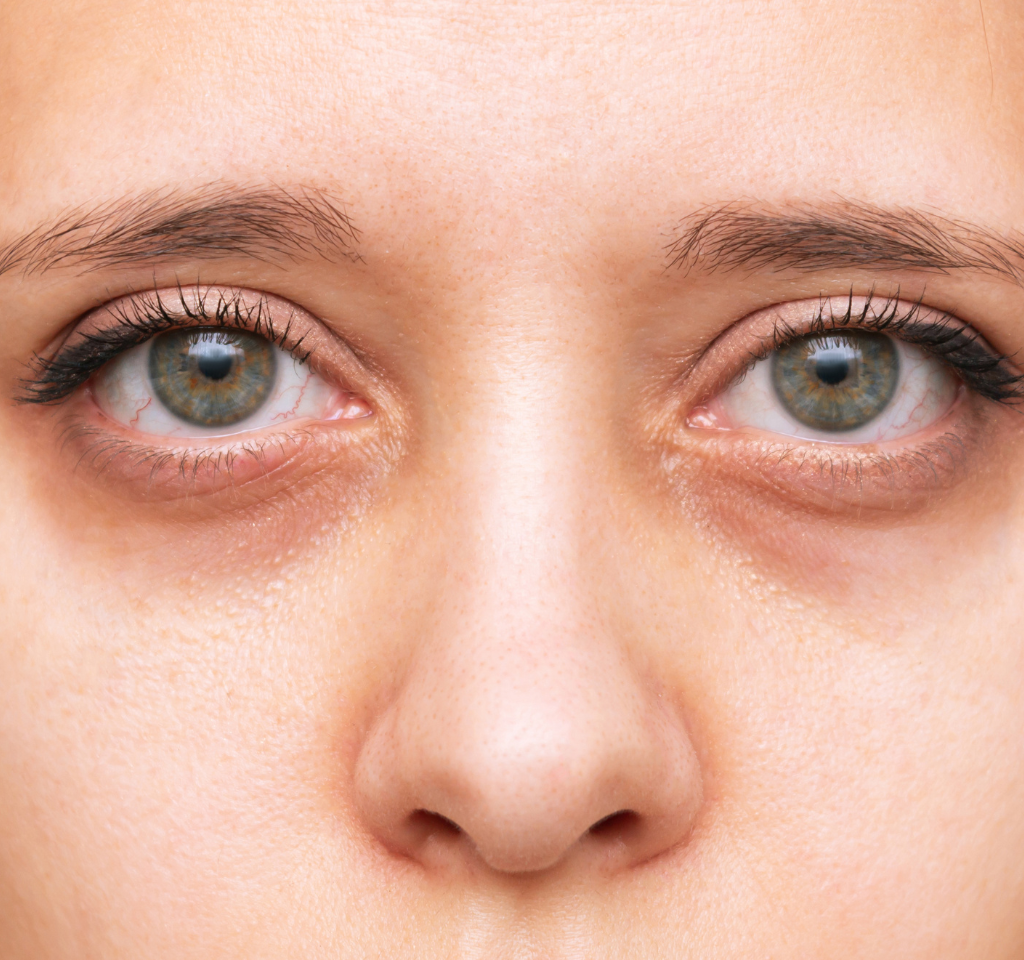
Stress looks different on every face and every body. You may notice:
- More oiliness or breakouts
- Increased dryness or tightness
- Redness or sensitivity
- Itching or an urge to touch or pick the skin
- A flare in an existing condition
- A complexion that looks tired after disrupted sleep
- Less consistency with cleansing, moisturizing, or sun protection
These changes are signals to become curious, not critical.
Instead of asking, What is wrong with my skin? Try asking:
What has changed in my body, environment, routine, or emotional life?
The answer may be a new product, a hormonal shift, colder weather, medication, illness, insufficient sleep, or stress. Sometimes several factors are working together.
Persistent, painful, rapidly changing, or concerning symptoms should be evaluated by a board-certified dermatologist. Mindfulness can complement appropriate care, but it should never delay diagnosis or treatment.
Integrating Mindfulness Into Your Skincare Routine
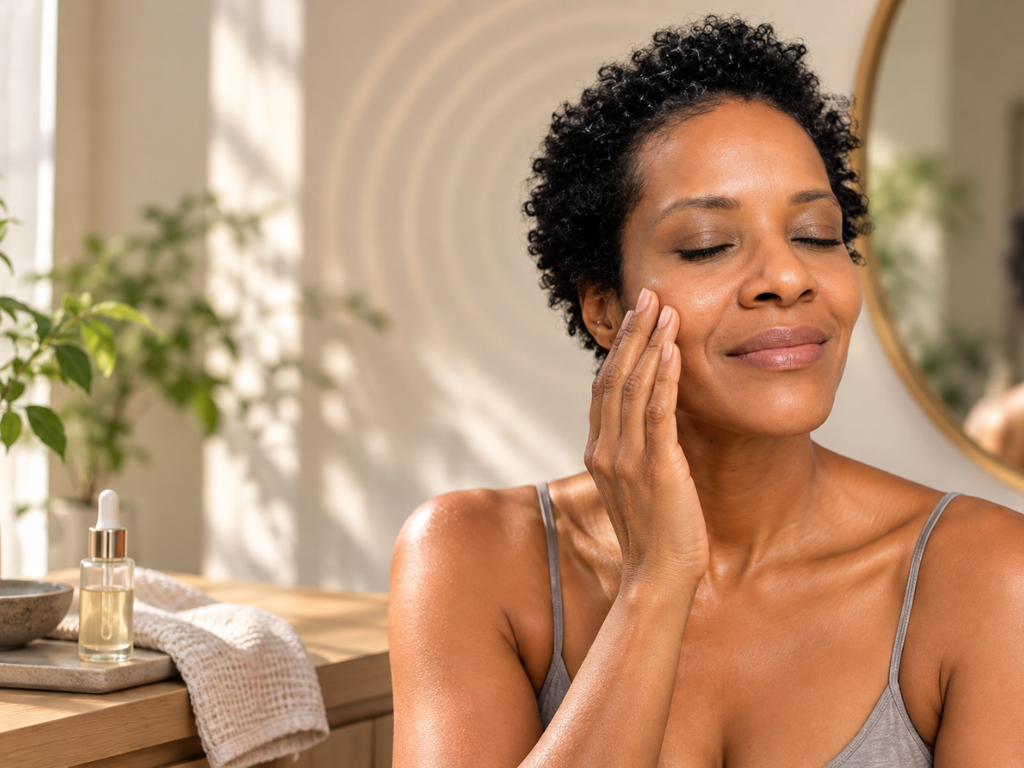
A mindful skincare routine does not need more steps. In fact, it often asks us to do less—but with greater awareness.
My own approach to skincare is grounded in ritual. I love effective products, beautiful textures, and the feeling of applying something nourishing to my skin. But the ritual becomes more meaningful when I am present for it.
Instead of moving quickly through cleansing and moisturizing while thinking about the next task, I can use those few minutes to return to myself.
Begin by pausing
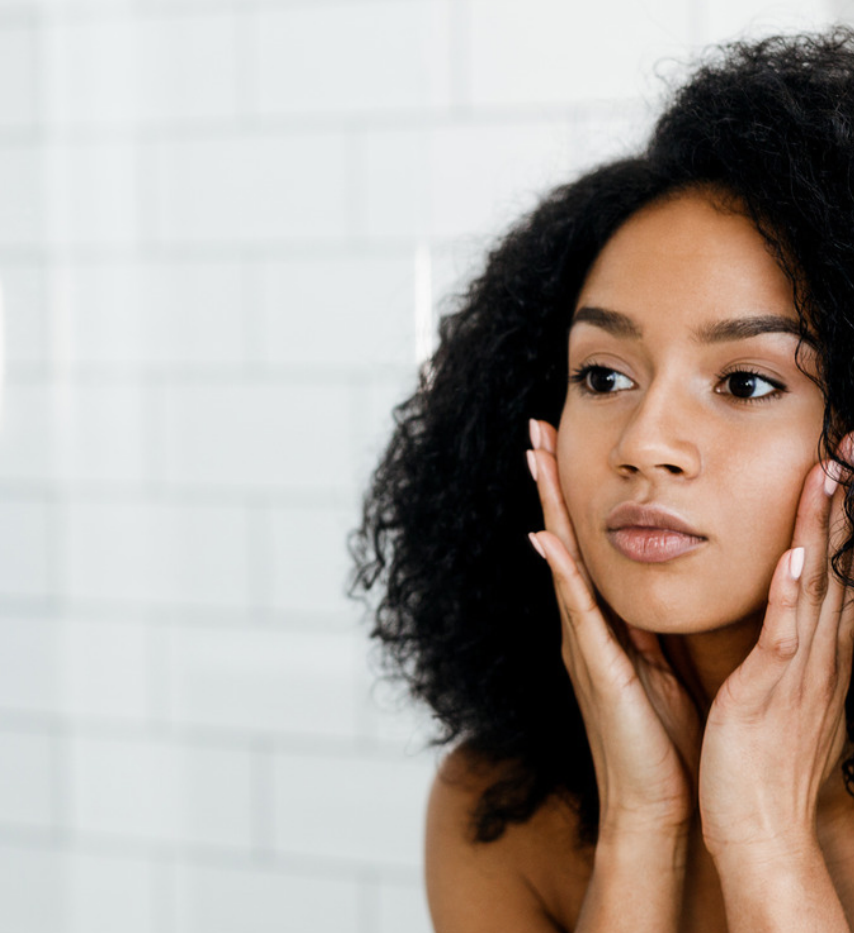
Before reaching for a product, take one unforced breath.
Notice whether your jaw is tight or your shoulders are lifted. Feel your feet on the floor. Look at your skin without immediately searching for flaws.
Ask:
- How does my skin feel today?
- Does it feel comfortable, dry, reactive, or congested?
- Am I caring for my skin—or trying to punish it into changing?
This small pause can help you respond to what is present instead of automatically repeating a routine that may no longer suit your skin.
Use touch with intention
Apply cleanser, serum, or moisturizer slowly and gently. Avoid unnecessary pulling, aggressive rubbing, or using more pressure because you feel frustrated with your skin.
Let your touch communicate care.
While applying moisturizer, soften your face and exhale slowly. This facial technique doesn’t promise to erase lines or transform the skin overnight. It brings the nervous system and the beauty ritual into the same moment.
Keep the routine simple enough to repeat

An elaborate routine may feel soothing when you have time, but effective skincare does not have to take over your life. A simple foundation can include:
Morning
- Gentle cleansing or rinsing, depending on your skin
- Moisturizer as needed
- Broad-spectrum sunscreen
Evening
- Gentle cleansing to remove sunscreen, makeup, and the day
- A treatment your skin already tolerates, if desired
- Moisturizer
Consistency generally serves the skin better than frequently changing products in response to every imperfect day. My skin longevity routine offers a simple framework to support your skin without creating another source of pressure.
For changing or mature skin, you can also explore my guide to skincare habits to adopt after 50.
Mindfulness Techniques That Can Support Your Skin Ritual
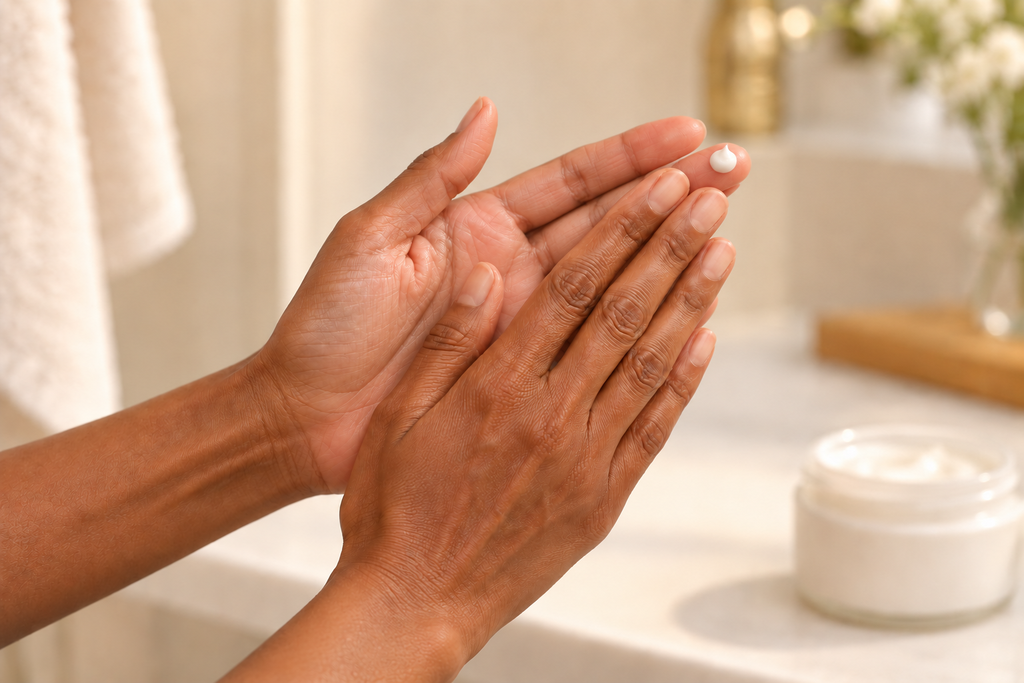
The following practices are not treatments for a skin disease. They are gentle ways to slow down, notice your habits, and make room for calm.
1. Take three breaths before beginning
Stand at the sink and let your hands rest on the counter.
Inhale naturally.
Exhale a little more slowly.
Repeat three times, allowing your shoulders and face to soften.
2. Practice a one-minute sensory ritual
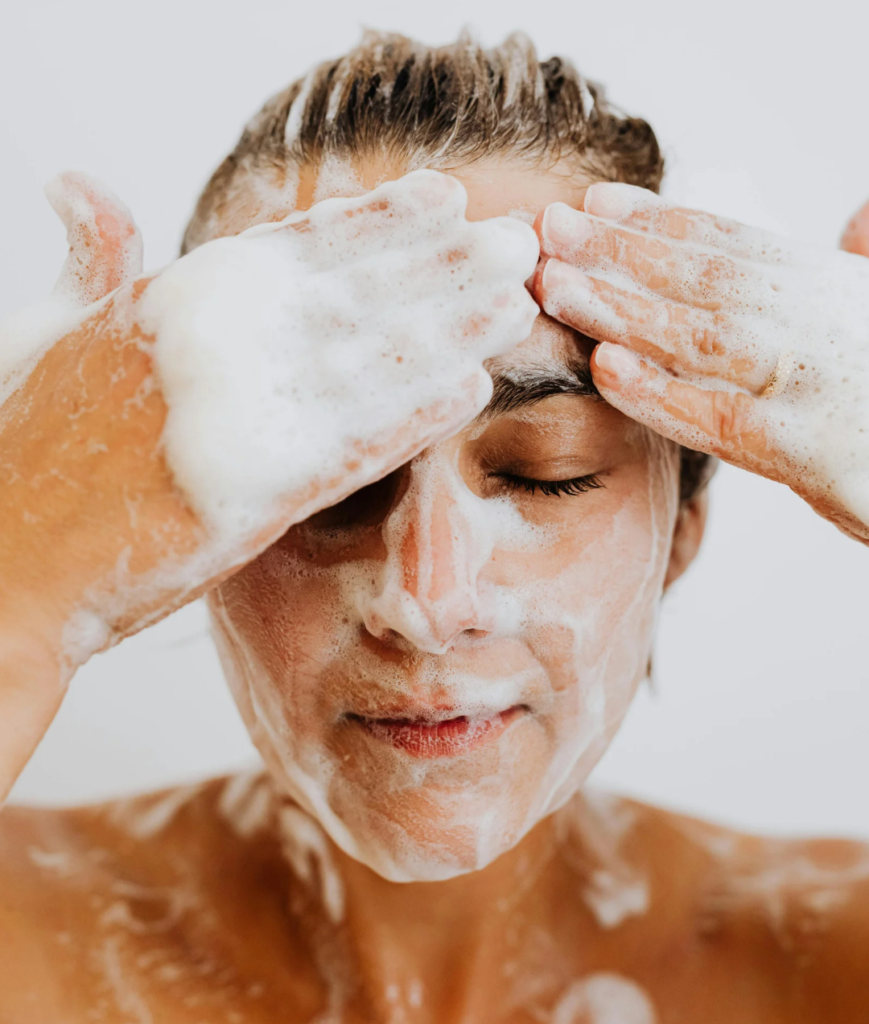
As you cleanse or moisturize, notice:
- The temperature of the water
- The texture of the product
- The scent, if the product is fragranced and your skin tolerates it
- The feeling of your hands against your face
- The pace of your breathing
This is mindfulness in ordinary life: being present with what is happening as it happens.
3. Interrupt skin picking with awareness
If you tend to pick, scratch, or repeatedly examine your skin when anxious, pause before judging yourself.
Notice what happened immediately before the urge. Were you worried, tired, bored, or standing close to a magnifying mirror? Move your hands away from your face, step back from the mirror, and take a breath. If the behavior feels difficult to control or causes injury or distress, seek professional support; it is not simply a matter of willpower.
4. Create an evening cue for calm
Dim the lights, put your phone aside, and let your evening cleanse signal the end of the active part of the day.
Your skincare routine can become a bridge between doing and resting.
If you are new to Meditation, What Is Meditation? A Gentle Return to Yourself offers a simple practice that begins with one quiet breath.
5. Replace criticism with observation
When you look in the mirror, practice using neutral language.
Instead of My skin looks terrible, try:
My skin looks more irritated than usual today.
Instead of I have to fix this, try:
I am going to simplify my routine and pay attention to what my skin needs.
This isn’t pretending you don’t have concerns. It is choosing to meet those concerns without turning your reflection into an enemy.
The Real-Life Benefits of a Mindful Skincare Ritual
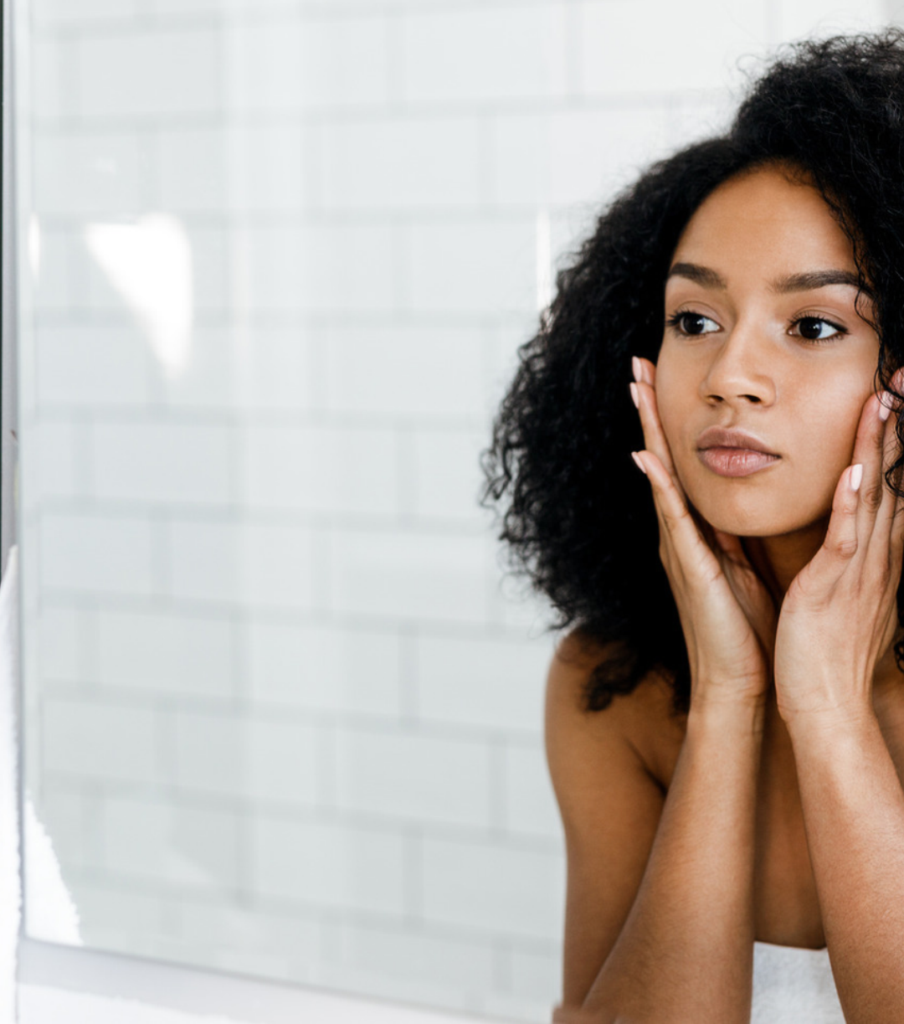
The most meaningful transformation may not be a dramatic before-and-after photograph.
It may be that you stop introducing a new product every time you feel anxious about aging. You notice irritation sooner. You become more consistent with sunscreen. You pick at your skin less often. You recognize when exhaustion—not another serum—is what you need. You learn when home care is appropriate and when it is time to consult a dermatologist.
Mindfulness can also change the emotional experience of skincare.
The mirror becomes less of a place for inspection and more of a place for connection. Fine lines become part of a living face rather than evidence of failure. Your routine becomes an act of relationship with yourself—not a daily argument with time.
This is the beauty philosophy at the heart of WAB.
Ageless beauty is not the absence of change. It is the presence we bring to the changes we are living through.
A Two-Minute Mindful Skincare Practice
Tonight, try this as you apply your moisturizer:
- Place both feet on the floor.
- Drop your shoulders away from your ears.
- Take a gentle breath in and a longer breath out.
- Warm the moisturizer between your fingertips.
- Apply it slowly, noticing the sensation of touch.
- Silently repeat: I care for my skin because it belongs to me—not because it must be perfect.
Then step away from the mirror.
Let the ritual be complete.
The Glow That Begins Within
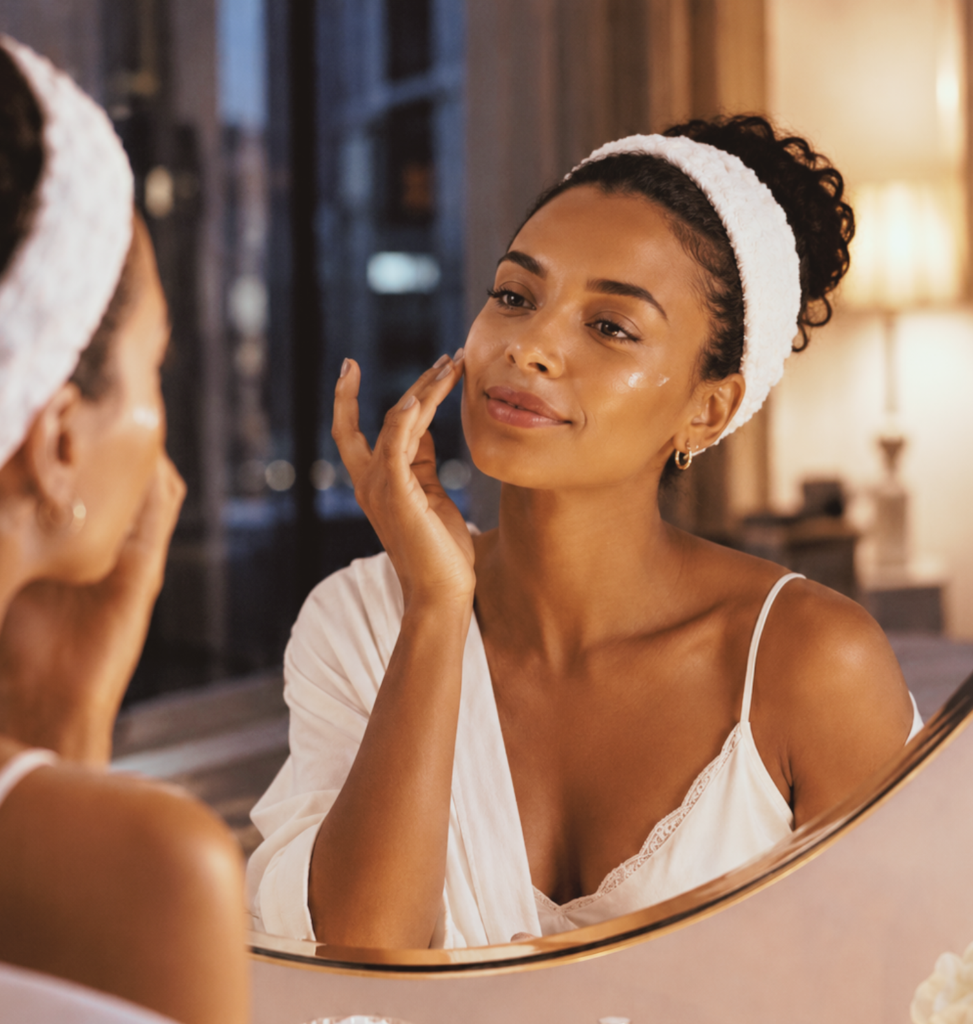
Healthy skin deserves evidence-based care: gentle cleansing, appropriate moisture, daily sun protection, and professional guidance when needed. Mindfulness does not replace any of that.
Mindfulness offers a different quality of attention.
It can help us notice the relationship between stress and our habits. It can slow the impulse to overcorrect. It can return tenderness to a ritual that beauty culture often turns into criticism.
Our mental state does not determine every change in our skin. But the way we meet ourselves—rushed or present, critical or compassionate—shapes the experience of caring for it.
True radiance is not created by a single product or a perfect routine.
It grows through consistency, awareness, and the willingness to care for ourselves from the inside out.
With love,
Michelle
