

Returning to your yoga practice after a summer break can feel like coming home to yourself.
Summer often changes our usual rhythm. Vacations, travel, family gatherings, outdoor activities, and less structured days can make it difficult to maintain a regular practice. Even when the pause is welcome, stepping back onto the mat may bring mixed feelings. We may feel excited to return while also wondering whether our body, strength, or flexibility has changed.
For me, yoga is rarely something I leave for very long. It grounds my physical body in the same way meditation grounds and centers my mind. Still, summer changes the shape of my practice. Travel, teaching, time outdoors, and a different daily rhythm may mean that my time on the mat looks less structured than it does during the rest of the year.
September brings a natural opportunity to return with renewed intention. As summer begins to fade and our schedules take shape again, we may feel called back to the practices that help us feel steady, present, and connected.
This September, I am especially excited about teaching and continuing to develop my yoga classes. I look forward to creating practices that help students breathe more deeply, move with awareness, and feel grounded as we enter the fall season.
Whether you are returning to yoga after a summer vacation, coming back after a longer absence, or simply renewing a practice that has remained part of your life, the invitation is the same:
Begin again with awareness.
Why Returning to Yoga Can Feel Meaningful

We may remember what our bodies once could do, how consistent we used to be, or how grounded we felt when yoga was part of our regular rhythm. When we return to the mat, it can be tempting to expect ourselves to begin exactly where we left off.
But the body standing on the mat today is not the same body that practiced yesterday, last month, or last season.
That is not a failure. It is simply an invitation to begin again with greater awareness.
For me, the mat is a place where I notice these changes. Yoga grounds my physical body, while Meditation helps ground and center my mind. Together, they create a sense of balance that I return to throughout the year.
As fall approaches and our schedules begin to take shape, many of us feel called back to the practices that help us feel centered. If yoga has been absent from your life for a few weeks, several months, or even years, you do not need to make up for lost time.
You only need to meet yourself where you are.
Why It Can Be Difficult to Return to Yoga After a Break

Sometimes we step away from yoga because life becomes busy. At other times, illness, injury, caregiving, travel, grief, changes in energy, or a loss of motivation interrupt our practice.
Even when yoga remains part of our lives, our relationship with it can change. A familiar practice may feel different after an illness, a stressful season, a change in schedule, or a shift in the body.
We may tell ourselves:
- I am no longer flexible enough.
- I have lost all my strength.
- I will not be able to keep up.
- I should have returned sooner.
- I need more time before I begin again.
Yoga does not ask us to arrive already flexible, strong, peaceful, or prepared. The practice begins with noticing what is present now.
If you are beginning yoga for the first time rather than returning to it, visit my complete guide to integrating yoga into your daily routine.
1. Release the Need to Start Where You Stopped
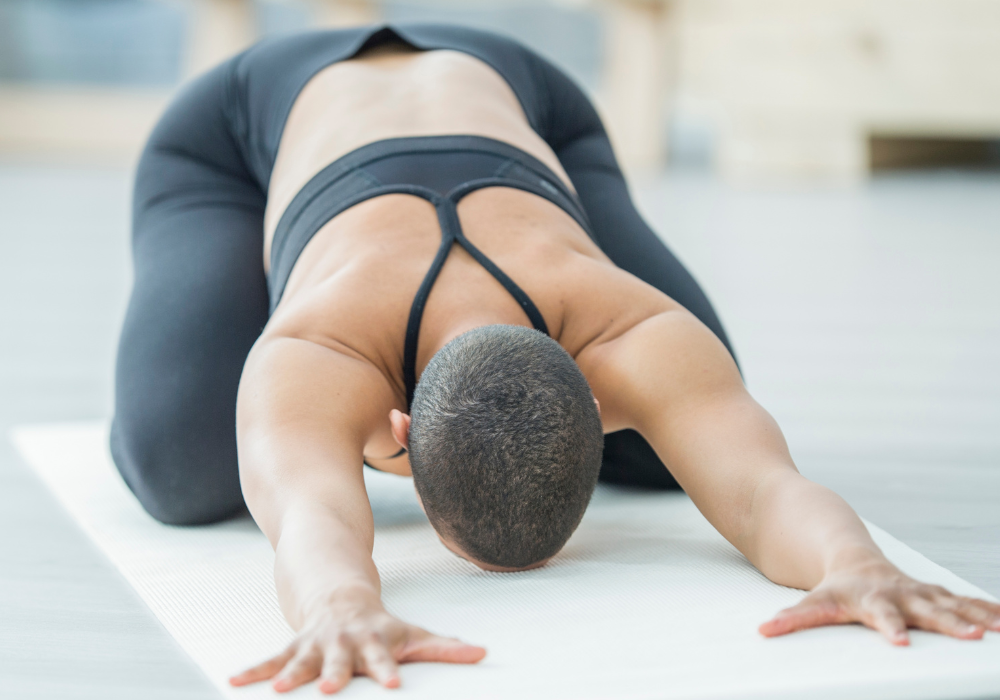
Your first practice back does not need to prove anything.
Avoid measuring today’s body against an earlier version of yourself. Your balance, flexibility, stamina, or comfort in certain poses may have changed. Approach those changes with curiosity instead of criticism.
Even though I practice regularly, I still find that each season asks something different of me. September encourages me to pause, notice what is changing, and allow my practice to renew rather than simply repeat itself.
Begin with simple movements that allow you to observe:
- How does my body feel today?
- Where am I holding tension?
- How is my balance?
- What feels supportive?
- Where do I need to soften or modify?
The first few practices are an opportunity to listen and become reacquainted with your body.
The National Center for Complementary and Integrative Health notes that yoga is generally considered safe for healthy people when practiced appropriately, but injuries can occur. A qualified instructor can help you choose safe variations, particularly if you are returning after an injury, experiencing physical limitations, pregnant, or managing a medical condition.
Returning gently is not a lesser practice. It is a wiser one.
2. Make Your First Practices Short and Repeatable

It is easy to feel enthusiastic and plan to practice every day for a long time. But a routine that is too demanding may be difficult to sustain.
Begin with 10 or 15 minutes.
A short returning practice might include:
- One minute of comfortable seated breathing
- Gentle shoulder and neck movements
- Cat–Cow or another comfortable spinal movement
- Child’s Pose or a supported resting position
- Low Lunge on each side
- Mountain Pose
- A gentle standing or seated twist
- A brief Savasana
Choose movements that feel familiar and accessible. You do not need to include every pose or move deeply.
A short practice that you can repeat creates more connection than one intense session followed by another long absence.
Consistency is not built by doing the most. It is built by making it possible to return.
For me, regular yoga is less about checking off a daily task and more about maintaining a relationship with my body. The practice gives me a physical place to arrive, listen, and reconnect.
3. Create a Rhythm Instead of a Rigid Schedule

A consistent yoga practice needs a place in your life, but it does not need to become another source of pressure.
Choose two or three realistic days each week. Then connect your practice to something already in your routine.
You might practice:
- Before your morning coffee
- After returning from a walk
- When you finish working
- Before your evening shower
- At the beginning of the weekend
- Before your regular Meditation
Keep your mat and any props in a visible, easy-to-reach place. Removing the small obstacles between you and the practice can make returning feel more natural.
If you miss a planned day, begin again at the next opportunity. Do not let one missed practice become evidence that you have failed.
The practice is not an uninterrupted streak.
The practice is the return.
As September arrives, I also think about rhythm in a broader sense. The end of summer often brings new schedules, new commitments, and a renewed sense of direction. This year, I am excited to bring that energy into teaching and developing my yoga classes.
Creating classes is another form of returning for me. I return to the foundations of yoga, to the needs of my students, and to the question of how a practice can support people in their everyday lives.
4. Let Your Yoga Practice Change With You

A lasting relationship with yoga requires room for change.
Some days may call for movement, balance, and strength. Other days may call for supported postures, gentle stretching, intentional breathing, or stillness.
All of it can be yoga.
After more than 35 years of practice, I have learned that yoga is not defined by how advanced a posture looks. It is shaped by the quality of attention we bring to the moment.
Yoga continues to teach me that the body does not need to be forced into a season it has already outgrown. The practice can evolve with us. It can become more spacious, more attentive, and more responsive to our needs now.
Ask yourself:
What kind of practice would support me today?
This question shifts yoga away from performance and toward relationship. It allows the practice to meet your body, energy, and season of life as they are now.
Research reviewed by the National Center for Complementary and Integrative Health suggests that yoga may support general wellness, stress management, balance, healthy habits, and aspects of mental and emotional well-being. The evidence varies depending on the condition and type of yoga being studied, so yoga is best understood as a supportive wellness practice rather than a cure-all.
A Practice of Returning

Coming back to yoga is not about recovering a former version of yourself.
It is an opportunity to discover who you are on the mat now.
For me, September is a reminder that renewal does not always require a dramatic change. Sometimes it is simply a renewed appreciation for the practices that have supported me all along.
Roll out your mat. Place your feet on the ground. Notice your breath. Begin with one movement that feels supportive.
If all you do is sit, breathe, and listen to your body, the practice has already begun.
And if your body is asking for rest, honor that wisdom too. As I shared in Rest Is Part of the Practice, stillness is not separate from our practice. It is one of the ways we receive what movement has opened.
You are not behind.
The opportunity to begin again is still here.
There is no need to return perfectly.
Whether you are stepping onto the mat after a long absence or renewing a practice that has grounded you for years, come as you are. Let this new season meet you there.
With love,
Michelle
